Addex Therapeutics raises USD 2.8 million under its at-the-market agreement
The Geneva biopharmaceutical company sold 437,869 ADSs under its ATM programme and said the proceeds extend its cash runway to the fourth quarter of 2027.
Coverage of exchanges, regulators, and corporate issuers across the United Kingdom and the Continent.
GSN covers five European markets: the United Kingdom, Germany, France, Switzerland and Spain. Four of them share a single regulatory chassis, and the fifth deliberately does not.
The common chassis is European Union law. Directive 2014/65/EU, known as MiFID II, sets the conditions for authorising investment firms and operating regulated markets, multilateral trading facilities and organised trading facilities across the Union, so a French or German or Spanish venue is not simply a national institution but a licensed category defined at Union level. Regulation (EU) 2017/1129, the Prospectus Regulation, then decides when an issuer must publish a prospectus to offer securities to the public or admit them to trading.
Its exemptions are what most small issuances turn on: offers addressed solely to qualified investors, offers to fewer than 150 natural or legal persons per Member State other than qualified investors, offers with a total consideration of at least EUR 100 000 per investor, and offers with a total consideration in the Union of less than EUR 1 000 000 calculated over a period of 12 months, with Member States able to exempt domestic offers up to EUR 20 000 000 over the same window. Cross-border listing inside the Union runs on the passporting of an approved prospectus rather than on a fresh national review.
Euronext is the clearest expression of that single-market design. One operator runs Amsterdam, Brussels, Dublin, Lisbon, Milan, Oslo and Paris as regulated markets, with Euronext Growth and Euronext Access segments beneath them in the same cities, so a Paris listing and a Milan listing sit on shared infrastructure and shared EU rules while keeping national supervisors. In Germany the Frankfurt exchange, operated by Deutsche Boerse, publishes separate statistics for new companies, listed companies, turnover and foreign shares on Xetra and Frankfurt, which is where the German end of GSN’s coverage begins.
The United Kingdom left that chassis and kept its own. Its growth market, AIM, runs on the London Stock Exchange’s AIM Rules for Companies, which require an applicant to appoint a nominated adviser and an AIM company to retain one at all times; if a company ceases to have a nominated adviser the Exchange suspends trading in its securities, and cancels admission if the position is not filled within one month. Rule 11 sets the general disclosure obligation, sitting on top of every other notification requirement in the book.
Switzerland is outside the Union altogether. The Swiss Stock Exchange has operated since 1850, built the first fully automated trading, clearing and settlement system for equity capital in 1996, describes itself as Europe’s third largest exchange by free float market capitalization as at January 2020, and carries a free float market capitalisation of around CHF 1.4 trillion concentrated in financial services, pharmaceuticals, food products and life sciences. That concentration, rather than any regulatory difference, is what makes Swiss market news read differently from the rest of the region.
Sources
This overview is based on the official documents listed below, last checked 2026-09-03. Figures are as stated in those documents.
The Geneva biopharmaceutical company sold 437,869 ADSs under its ATM programme and said the proceeds extend its cash runway to the fourth quarter of 2027.
The AIM-listed tin and critical metals producer said drill hole LRD097 intersected 35.59 metres at 1.52 percent lithium oxide.
The Hamburg shipowner reported first-half revenues of EUR 78.6 million, lifted its EBIT outlook and announced the acquisition of four product and chemical tankers.
The French biopharmaceutical company said it has finalized the purchase of Kartos Therapeutics to strengthen its oncology pipeline.
The Asturian technology company briefly suspended its liquidity agreement with Renta 4 Banco on 17 August to execute a block purchase of own shares.
The St. Gallen sports technology group renewed its exclusive global rights to Euroleague Basketball official data and AV betting feeds, covering more than 650 games a year.
The AIM-listed technology group said its Densitron brand will supply customized displays for an electric delivery vehicle application.
Immatics N.V. reported second quarter 2026 financial results and provided a business update on its lead melanoma therapy anzu-cel.
The renewable energy producer said the International Finance Corporation plans to subscribe convertible preferred shares in its VMI subsidiary, pending a September shareholder vote.
The Spanish construction group returned to positive net profit despite the impact of the Flaggers litigation and reported 711.3 million euros of liquidity.
The Swiss online pharmacy group reported first-half external revenue of CHF 627.8 million and said it has increased all elements of its full-year 2026 guidance.
The Africa-focused energy company said seven-month cash collections reached 247.9 million dollars and revenue rose 10 percent.
The Nuremberg database company reported annual recurring revenue of EUR 37.9 million and a sharply lower churn rate in its half-year report for 2026.
The French satellite operator said completion of the programme's First Rendez-Vous opens full industrial execution, with investments of over 3 billion euros planned through 2034.
The Spanish renewables group priced the bonds at an 11.50 percent annual coupon with mandatory conversion at 5.00 euros per share in 2029.
The Swiss plasma control and x-ray group reported a 5.6% rise in first-half net sales, a book-to-bill ratio of 1.48 and full-year sales guidance of CHF 540 to 570 million.
The AIM-listed diagnostics data firm said the study will evaluate up to 20 next-generation sequencing assays across US laboratories.
The Berlin isotope specialist reported stable half-year sales of EUR 149.3 million and slightly higher net income, reiterating its full-year guidance.
The French gene-editing biotech confirmed a cash runway into the fourth quarter of 2027 and pointed to pivotal-stage data expected for lasme-cel in late 2026.
The EU authorised lurbinectedin with atezolizumab on 29 May 2026, turning the French compassionate use programme that drove PharmaMar's European growth into an authorised market.
The Swiss anti-infectives specialist said BARDA released a further USD 30 million under an existing agreement after a prespecified enrollment milestone was met.
The listed SpaceTech investor said the C Share investment takes deployed proceeds past 40 million pounds, triggering partial share conversion.
The Hanover-based inspection systems maker reported a sharply higher order book for the first half of 2026 and confirmed its full-year forecast despite lower revenue.
The multi-technical services group reported revenue of 5,156.6 million euros, a 6.2% EBITA margin and five bolt-on acquisitions representing about 670 million euros of annual revenue.
The Spanish train maker posted revenue of 375.8 million euros in the first half of 2026 and kept its full-year guidance intact.
The Geneva cybersecurity and satellite group posted preliminary H1 2026 revenue up 115%, reported about $495 million in cash and reaffirmed full-year guidance.
The UK infrastructure group reported half-year revenue of 543.1 million pounds and raised its interim dividend to 2.0p per share.
The hydrogen electrolysis specialist cut its fiscal 2025/26 earnings outlook and will book about EUR 30 million in one-time impairments after discontinuing SOEC mass production.
The French mining group reported 276 million euros of adjusted EBITDA and a return to positive free cash flow, with its Argentine lithium plant at 90% of nameplate capacity.
The Spanish stainless steel tube maker kept a double-digit EBITDA margin and secured over 100 million euros in umbilical tube orders despite a difficult environment.
The AIM-quoted computer vision company said it will deliver a robotics proof-of-concept for a global industrial technology company.
The Bremen-based space group reported higher revenues and earnings for the first half of 2026 and confirmed its full-year guidance.
Kalray, a French semiconductor company, announced a partnership with Bull (Eviden) to co-develop Ultra Ethernet-compatible networking technology for AI and high-performance computing.
The Spanish aerospace and engineering group will manufacture carbon fibre structural parts for SkyDrive's SD-05 electric aircraft at its Jerez plant.
The AIM-quoted AI services firm said new and repeat orders in Chile, the UK and North America total $87,000 in contract value.
The Wiesbaden-based carbon specialist posted a positive net result and stronger free cash flow in the first half of 2026 despite a 13 percent sales decline.
The Paris-listed enterprise AI company posted 1.1 million euros in half-year revenue and said it is in advanced financing discussions to extend its cash runway.
Spain's market regulator has cleared Bondalti Iberica's exclusion offer for the 22.77 percent of chemicals group Ercros it does not already own.
The digital transformation group said the three-year award remains subject to final signature after a standstill period that ended on 30 July.
The French defense technology group reported quarterly revenue of 144 million euros and confirmed its full-year targets as a Thales tender offer looms.
The RF technology maker reported adjusted EBITDA of £11.3m and said its order book covers about 90 percent of market expectations for FY2027 revenue.
The AIM-listed group said its Wind Energy Services platform is on track for £17m to £18m of full-year revenue, with a £50m medium-term target.
The human challenge trial specialist reported H1 2026 revenue of £16.3m and said proposal volumes are up around 45 percent year on year.
The AIM-listed chip designer said a European satellite communications customer placed follow-on orders for its ENS92040 distributed digital beamformer.
The AIM-listed software group said revenue rose to £57.7m and cloud annual contract value grew 37 percent, with AI products in over 40 percent of new orders.
The Greenland-focused miner said Main Vein drilling in the Mountain Block averaged 42.8 g/t gold, with a best intercept of 132.5 g/t over 0.50 metres.
The UK construction group said adjusted pre-tax profit will land at the top end of analyst forecasts of £51.4m to £53.4m for the year to 30 June 2026.
On the SIX Swiss Exchange, listed companies may report results under IFRS, US GAAP, or Swiss GAAP FER depending on their listing standard, which complicates direct profit comparisons between firms.
In Spain there is a mechanism, the material fact disclosure, that requires listed companies to warn immediately when their figures deviate from expectations, without waiting for the scheduled earnings date.
When does a gap from financial targets become a legal duty to disclose immediately? An explainer on the European mechanism that separates a mandatory profit warning from a routine guidance update.
A single London plumbing system decides who learns a listed company's earnings first, and the rule is that nobody should. Here is how it actually works.
Before a single share trades on SIX Swiss Exchange, a private, FINMA-licensed review body must approve the listing prospectus. How this two-step approval process works under FinSA.
For weeks after a stock market debut, the underwriter can buy and sell shares of the company itself without it counting as manipulation. Here is how the greenshoe works under the Market Abuse Regulation.
How a liquidity contract, overseen by the AMF, lets an independent provider narrow the bid-ask spread on a thinly traded stock without crossing the line into market manipulation.
Why listed German companies must prepare both an IFRS consolidated group statement and separate HGB statutory accounts, and what investors, tax authorities and shareholders actually use each set of figures for.
A look at how underwriters use the over-allotment option, nicknamed the greenshoe, to manage price swings in the weeks after a London IPO.
A look at registered shares with transfer restrictions (vinkulierte Namenaktien): how Swiss companies use their articles of association to decide who is entered in the share register as a voting shareholder, and how this can separate ownership from voting rights.
Why can one listed company in Frankfurt skip quarterly reports entirely while another must report in English every three months? The answer lies in which listing segment it chose.
A look at the mechanism through which Spain's securities regulator requires short positions in listed shares to be reported, and, above a certain threshold, made public.
Conversion ratio, premium, and dilution: how OCEANE bonds let French listed companies raise funds without an immediate capital increase.
A net short position of 0.2% of a company's issued share capital has to be reported to the FCA. Here is how that threshold works under the Short Selling Regulations 2025, what gets published, and what the regime deliberately does not cover.
How Switzerland's two Pfandbrief institutions refinance mortgages, what the cover pool contains, and the four layers of security behind the instrument.
How Spain's Tesoro Público places Treasury bills, medium-term and long-term bonds at auction, the difference between competitive and non-competitive bids, and the role of primary dealers.
On Euronext Paris, IPOs run on two separate tracks for retail and institutional investors, which is why the same kind of order can be treated very differently depending on which tranche it falls into.
A look at Section 327a of Germany's Stock Corporation Act explains how the law lets a majority shareholder push out remaining minority shareholders for cash compensation, and where this procedure's limits lie.
An explainer on the gilt strips market, where the coupon and principal payments of a UK government bond are separated and traded as individual zero-coupon instruments.
A look at Swiss takeover law: the 33.3% mandatory-offer threshold, the Takeover Board's review of offer documents, and the best price rule that protects minority shareholders.
A look at the legally protected cover pool that gives Pfandbrief holders a priority claim over other creditors if the issuing bank fails.
Twice a year, a technical committee decides which companies enter and leave the Ibex 35 based on liquidity and free float, forcing index-tracking funds to buy or sell automatically.
Contribution cap, eligibility limited to European securities, taxation that eases over time: how the French equity savings plan (PEA) works, the country's flagship tax-advantaged wrapper for stock market investing.
UK Stamp Duty Reserve Tax adds 0.5% to most purchases of UK-incorporated shares and is collected automatically through the settlement system, but shares on London's AIM market are structurally exempt.
Why listed companies in Switzerland can sometimes withhold price-sensitive information for weeks without violating securities law.
A company can begin trading in Spain on BME Growth without full-prospectus approval from the CNMV. Here is how that process differs from the main market.
From order execution to the moment securities and funds actually exchange hands, several days and multiple intermediaries are involved, a mechanism largely invisible to retail investors.
A look at Germany's two-tier share structure of common and preferred stock: why companies issue both classes and what stock corporation law says happens when the preferred dividend is skipped.
A company offering new shares at a discount is not simply giving investors a bargain: the math behind rights issue pricing, and the theoretical ex-rights price it points to, explains why.
How the interest-rate outlook forms, who reads it, and why the mere expectation of a price change moves markets more than the change itself.
Behind a name that sounds like a bond lies a hybrid instrument with derivatives, issuer risk, and liquidity rules far different from traditional fixed income.
A behind-the-scenes look at bond syndication: how lead managers, bookrunners, and co-managers bring a large issuance to market together.
A passive fund can hold every stock in its benchmark and still finish the year in a different place. Here is why that gap, known as tracking error, is a structural feature of indexing rather than a flaw.
A simple bond-market mechanism explains why lending to the state for two years can pay more than lending for ten.
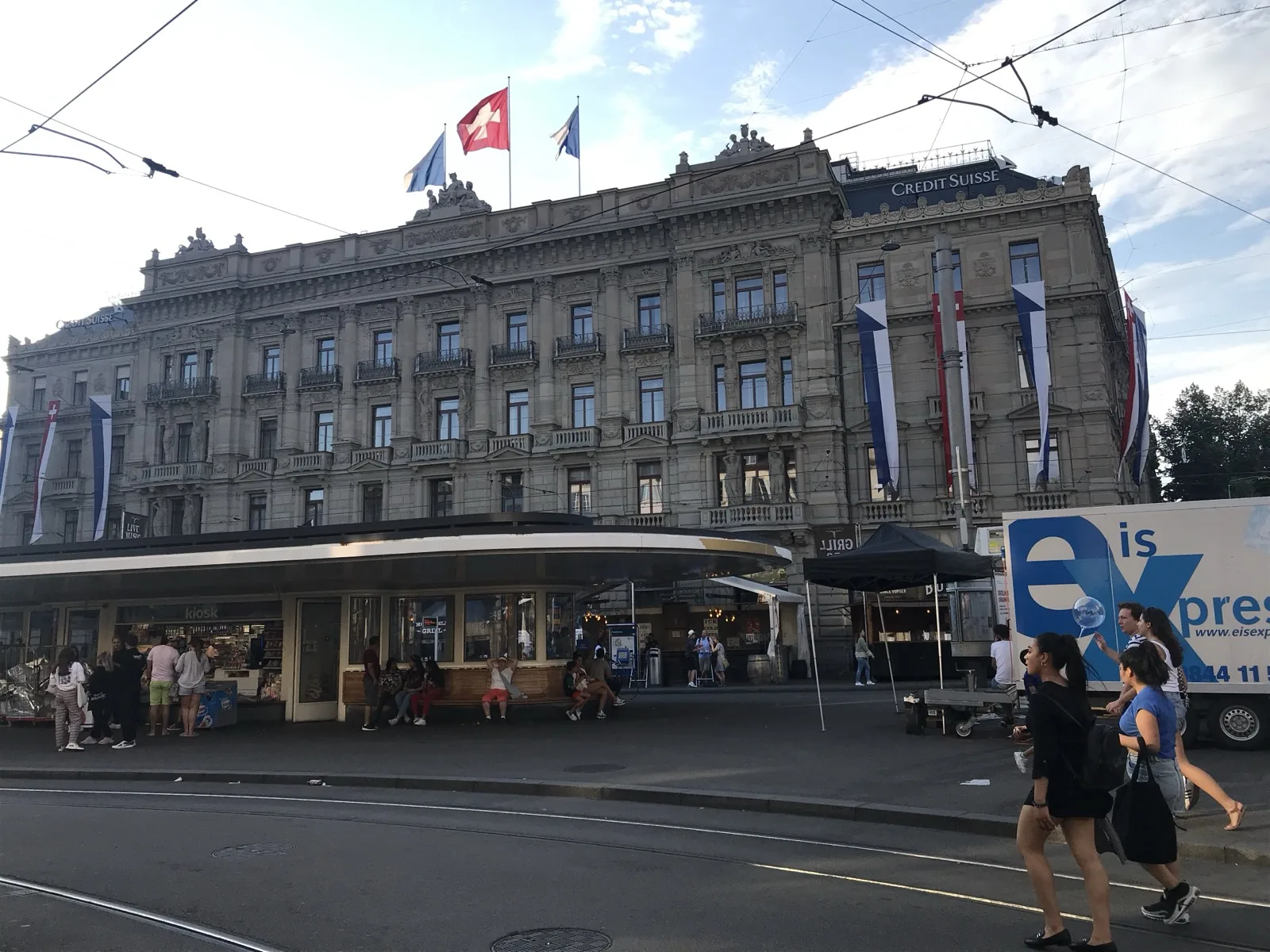
How contingent convertible and write-down bonds are built, what event triggers them, and what happened to Credit Suisse's AT1 instruments in 2023.
A stock split multiplies the shares in circulation without changing the company's value. Here's how the mechanism works and why listed companies use it.
Net short-selling positions don't stay hidden forever: above certain thresholds, they must be reported to regulators, and some of that data becomes publicly accessible.
When an IPO prices at or above its indicative range, it chiefly reveals the order book's construction, not a guarantee of future performance.
Auctions raise most of the money the UK government borrows each year. Here is how the Debt Management Office structures them, who is allowed to bid, and what the 2026-27 remit puts on offer.

After a stock split, the number of shares in your portfolio doubles, but its value remains exactly the same. A look at what really changes and what's pure cosmetics.
The same state pays different interest rates based on when it issues debt; this explains how the spread comparing Spanish and German bonds is calculated and what it actually reveals.
From initial consultation to binding rule: how financial regulators like BaFin develop and enforce disclosure requirements for listed companies through a multi-stage process.
A look at how index committees like the one behind the FTSE 100 set objective rules for membership, then apply them on a fixed quarterly schedule rather than by discretion.
In France, crossing the 30% threshold of capital or voting rights, alone or acting in concert, in a listed company requires the acquirer to offer to buy all remaining shares. A mechanism central to minority shareholder protection.
How the market model, trade surveillance and the supervisor interact in Switzerland, and why none of these layers aims to limit price swings.
When a Spanish-listed company issues new shares, the number of shares outstanding grows overnight. Here's how that effect gets distributed between existing and new shareholders.
A company can achieve record profits and still be punished by markets. The reason: a number no one officially publishes: analyst consensus.
How green bonds actually work, who verifies the use of proceeds, and what concretely sets them apart from ordinary bonds.
A UK take-private can hinge on a single shareholder vote threshold rather than a simple majority. Here is how a scheme of arrangement differs from a contractual offer.
How a German stock exchange withdrawal proceeds legally and what it practically means for shareholders' trading ability, information rights, and compensation.
The UK's Market Abuse Regulation covers far more than trading on secret tips. Here is what it actually bans, and why the scope is wider than most people assume.
From the subscription period through first trading, the concrete steps that define an IPO on Euronext Paris.
Anyone acquiring more than 30 percent of a publicly listed company in Germany must make an offer to all remaining shareholders under rules the WpÜG spells out in precise detail.
A UK rights issue hands existing shareholders new shares at a discount, but the mechanics of dilution and pre-emption mean the outcome depends entirely on what an investor chooses to do next.
A look behind the scenes of the Frankfurt Stock Exchange's electronic Xetra system: from the central order book to price determination.