 lobal Securities News
ADvTECH lifts half-year revenue 8% and raises interim dividend to 53.0 cents
South African education group ADvTECH reported revenue of R5 060 million for the six months to 30 June 2026 and declared an interim dividend of 53.0 cents per share.
Exchanges, listings, and reform across Africa's fastest-growing capital markets.
GSN covers four African markets: South Africa, Nigeria, Egypt and Kenya. They differ more from one another than the shared continent label suggests, above all in whether foreign money can get out again.
South Africa has the deepest market and the most conventional statute behind it. The Financial Markets Act 19 of 2012, which commenced on 3 June 2013, licenses and regulates exchanges, central securities depositories, clearing houses and trade repositories, governs securities trading, clearing, settlement and custody, prohibits insider trading and other market abuses, and replaced the Securities Services Act, 2004 in order to align the regime with international standards. The sovereign bond market is the other half of the story for readers. In the 2026 Budget Review the National Treasury put the gross borrowing requirement for 2026/27 at R380 billion, down from R434.3 billion projected at the time of the 2025 Budget, with gross government debt stabilising at 78.9 per cent of GDP in 2025/26 and yields on government bonds of all maturities falling below 9 per cent by the end of January 2026 for the first time since March 2018.
Nigeria is the cautionary case. FTSE Russell added Nigeria to its watch list in September 2022 after international institutional investors reported difficulty repatriating capital, suspended Nigerian constituents from its equity indices, and on 08 September 2023 reclassified the market from Frontier to Unclassified, deleting it from FTSE Russell equity indices. The exchange itself, Nigerian Exchange Limited, has been building out board structure in the other direction, running a Growth Board aimed at small-cap and fast-growth companies with relaxed entry criteria, expanded designated advisers, a reduced fee structure and lighter post-listing obligations than the main board carries.
Kenya’s market is smaller and rule-dense. The Capital Markets Authority supervises it under the Capital Markets Act and the Central Depositories Act, 2000, together with regulations covering public offers, listing and disclosures, takeovers and mergers, foreign investors, asset backed securities, real estate investment trusts and, since 2015, derivatives markets. The Nairobi Securities Exchange publishes daily levels for its three headline indices, which stood at 254.60 on the NSE All Share Index, 4,405.85 on the NSE 20 Share Index and 7,098.28 on the NSE 25 Share Index as of 02-SEP-26. Government paper is retail-accessible: the Central Bank of Kenya auctions Treasury bonds monthly, most at fixed rates, and individuals can buy directly through the Dhow CSD portal rather than through an intermediary.
Egypt’s listing regime sits with the Financial Regulatory Authority, whose listing rules govern admission to the Egyptian Exchange, and the market’s direction is bound up with the state divestment programme the IMF programme documents describe, under which entities deemed strategic or with potential for value maximization are prepared for listing on the stock exchange. In the FTSE classification as at September 2023, South Africa is Advanced Emerging and Egypt Secondary Emerging, while Kenya is Frontier. GSN covers all four with the same test applied to each disclosure: what the exchange or regulator actually published, and on what date.
Sources
This overview is based on the official documents listed below, last checked 2026-09-03. Figures are as stated in those documents.
South African education group ADvTECH reported revenue of R5 060 million for the six months to 30 June 2026 and declared an interim dividend of 53.0 cents per share.

Geregu Power told the Nigerian Exchange that the eighth coupon and part principal on its 40,085,000,000 naira Series 1 fixed rate bond had been paid.

Liberty Kenya Holdings Plc reported an insurance service result of 448 million shillings and earnings per share of KShs 0.43 for the six months to 30 June 2026.

Orascom Construction posted first half 2026 revenue of USD 2,978.0 million and EBITDA of USD 200.9 million, with consolidated backlog reaching USD 10.9 billion.

Adnoc Distribution has entered a definitive agreement with Reatile Group to secure Broad-Based Black Economic Empowerment compliance for its proposed acquisition of Shell Downstream South Africa.

Guinea Insurance said it completed a rights issue and private placement and was named by NAICOM among insurers meeting the capital requirement under NIIRA 2025.

Crown Paints Kenya Plc reported half year group revenue up 13% to Kes 8.4 billion and profit of 486 million shillings for the six months to 30 June 2026.

Qalaa Holdings told the Egyptian Exchange that the Egyptian Refining Company repaid $244 million of subordinated debt, cutting the outstanding balance to $565 million.

South African tailings retreatment producer DRDGOLD reported revenue of 11,159.0 million rand for the year to 30 June 2026 and declared a final dividend of 120 SA cents.

Caverton Offshore Support Group reported half year revenue of 14.7 billion naira, with second quarter revenue 41 per cent above the first quarter.

Car & General (Kenya) Plc reported half year turnover of Ksh 15.6 billion, up 30%, profit after tax of Ksh 2.6 billion and an interim dividend of Ksh 1.00 per share.

Egyptian snack food producer Edita Food Industries reported second quarter revenue of EGP 6.5 billion, up 30.5% year on year, and net profit of EGP 706.7 million.

JSE-listed self storage REIT Stor-Age agreed to acquire a 10 property Xtraspace portfolio for R387.0 million and to manage six further sites under a new agreement.

Coronation Infrastructure Fund is offering up to 20 billion naira of units at 107.00 naira each under its 200 billion naira shelf programme.

ALP REIT said Kenya's Capital Markets Authority and the Nairobi Securities Exchange approved a supplementary offering memorandum, clearing the way for 4,998,485 new units.

Egyptian pharmaceutical distributor Ibnsina Pharma reported first half gross revenues of EGP 43.2 billion, up 18.1%, and net profit of EGP 511.3 million, up 31.5%.

Harmony refinanced its 2022 dollar and rand syndicated facilities and the MAC Copper bridge loan with new US dollar, Australian dollar and rand tranches, reporting about 93% lender participation.
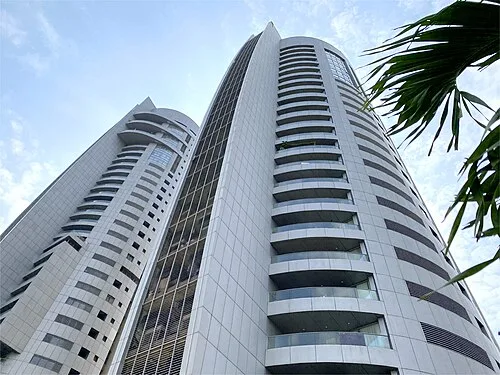
Aradel Holdings published unaudited results for the six months to 30 June 2026, with revenue up 577 per cent and group production averaging 139.5 kboepd.

Centum Investment Company Plc reported nil borrowings, annuity income up 41% to Kes 938 million and a proposed dividend of Kes 521 million for the year ended 31 March 2026.

Egyptian developer Madinet Masr said it has bought back 1% of its outstanding shares under a board authorisation allowing purchases of up to 2% of total shares.

JSE-listed Argent Industrial bought the UK-based Ramsden Group for GBP 10 836 650 in cash, a category 2 transaction under the JSE Listings Requirements.

The Initiates Plc declared an interim dividend of N0.20 per share for the period ended 30 June 2026 after half year revenue rose 105.1 per cent.

Kenyan coffee grower Eaagads Limited reported pre-tax profit up 125% to KShs 39 million for the year to 31 March 2026 as prices rose 32% and volumes fell.

eFinance Investment Group said its eFinance unit signed a cooperation protocol with Egypt's State-Owned Enterprises Unit to host and operate the Rasheed platform.

Listed issuers in Kenya share one reporting calendar set by the Capital Markets Authority, but banks and insurers answer to a second supervisor, and that overlay splits the market into two reporting rhythms.
An educational explainer on how Egyptian Exchange indices are built: constituent selection criteria, free float and weight capping adjustments, and the divisor's role in keeping the series continuous.
PenCom's multi-fund structure sorts every Retirement Savings Account into an age-based fund, each carrying a ceiling on variable income instruments. Here is how that allocation is set and changed.
The NSE 20 Share Index averages its constituents geometrically rather than by market value, a construction choice that shapes what the number can and cannot tell fund investors.
An educational look at how cumulative voting works in board elections at companies listed on the Egyptian Exchange, and how a simple formula sets the minimum share of votes needed to secure one seat.
Nigerian takeover law treats 30 percent of the voting shares as control. Here is how that threshold triggers a mandatory offer to every shareholder, and what changes once one shareholder already holds 50 percent.

Kenyan law forces anyone crossing 25 percent of a listed company's voting rights to offer to buy out all remaining shareholders. Here is how that mandatory takeover offer works.

A detailed look at how bonus share issues funded by capitalizing reserves work in Egypt, from extraordinary general meeting and FRA approval to the reference price adjustment and share registration.
When a listed Nigerian company purchases its own shares, the stock does not simply disappear. Here is how a buy-back is authorised, executed on the exchange, and recorded afterwards.

A declared dividend does not automatically belong to whoever held the shares on announcement day. Book closure, the settlement cycle and a three-year unclaimed-assets clock decide who actually gets paid.
An educational look at how Egypt's investor protection fund for settlement irregularities works: how it is funded, the limits of its coverage, and how claims are reviewed and compensation paid.

Nigeria's investments and securities law requires every registered exchange to run an investor protection fund. Here is what it covers, how it is capitalised, and how a claim is filed and decided.
Kenya's collective investment scheme rules split one commercial job into three regulated ones, so the firm managing a fund never holds its assets. Here is how that custody separation works.
An educational explainer on how immediate material event disclosure works on the Egyptian Exchange, from the materiality standard to the official publication channel and the temporary trading halt that keeps everyone on the same information.

An educational explainer on the difference between the limited review of interim statements and the full audit of annual statements in Egypt, the role of the audit committee and the auditors register, and what a qualified opinion means.
A look at the rules that set deadlines for EGX-listed companies to disclose their quarterly and annual results, and how the exchange manages trading in a stock around these sensitive moments.

A panel of banks must bid a minimum share of every government bond auction, hold R1 billion of Tier I capital and quote prices from 8h30 to 16h30. The rules are published, and there is no formal legal agreement.

Listed companies in Nigeria file annual and quarterly accounts to fixed deadlines. Here is how a missed filing becomes a public flag, then a fine, then a suspension of trading.

Nigerian listed companies must silence their own directors before results day, and the reason is built into how markets are meant to price information fairly.

Every company on the Nairobi Securities Exchange must publish a breakdown of its own shareholder register each year. Here is what that obligation requires, and why the regulator imposes it.

A look at how the Nairobi Securities Exchange's automated price limits and trading halts work to slow extreme intraday swings in individual stocks, without predicting where prices will settle.

Listed companies in Nigeria file quarterly accounts within 30 days and audited results within 90, but banks and insurers need a regulator's approval first. How the reporting machinery fits together.

How the Egyptian Exchange's SME listing tier sets admission thresholds, why a licensed financial advisor is an ongoing condition of listing, and how a company moves up to the main market.

How does Egypt's Financial Regulatory Authority let investors sell shares they don't own? An explainer on securities lending on the Egyptian Exchange: eligible stocks, required collateral, and how lenders and borrowers are matched.

Between a South African short sale and its delivery sit statutory account rules, Strate's settlement day obligations, and a moment of finality after which no instruction can be revoked.

A look at how issuing houses and underwriters use fixed price offers versus book building bids to mechanically determine an IPO's final price and share allotment on the Nigerian Exchange.

Before a Nigerian company's shares ever trade, the exchange sorts it onto one of three listing boards, and that decision sets the rules it must keep meeting.

Kenya's junior listing tier admits young companies to the Nairobi Securities Exchange without a long profit record. In place of that history sits a licensed firm that must vouch for them, and stay on.
Long before annual results are published, Kenyan law can force a listed company to admit its earnings are about to fall. Here is how that rule works and why it exists.

An educational explainer on how bondholders' rights are organized in Egypt through the bondholders' group and its representative, and how covenants and credit ratings monitor the issuer.
An explainer on how the Central Bank of Egypt's primary dealer system works for auctioning treasury bills and bonds, including how the cut-off yield is set and allotments are decided among participating banks.

South African law does not regulate a bookbuild directly. It regulates who may be shown the book, what may be said while it is open, and what the resulting price must be justified against in the prospectus.

A Nigerian commercial paper may be interest bearing or sold below face value. When it is discounted, the quoted discount rate is measured against face value and the investor's return is not, which is why the two numbers differ.

Nigeria moved to a T+1 settlement cycle on June 1, 2026, one business day between trade and ownership. Here is what clearing, netting and the depository record actually do in that window.
Kenyan corporate bond issues appoint an independent trustee under a trust deed. Here is how covenant testing, compliance certificates and acceleration actually work.
How Kenya's Capital Markets Authority licenses stockbrokers and investment banks on the Nairobi Securities Exchange, and how the Investor Compensation Fund is designed to reimburse clients if one fails.

An educational explainer on how Egypt's sovereign sukuk are structured: the role of the special purpose company, the transfer of usufruct rather than title, and where the periodic return comes from until maturity.

Why does a stock listed on the Egyptian Exchange stop moving even as buy and sell orders keep flowing in? An explainer on how daily price limit bands work and what happens when a stock hits its upper or lower limit.
On the JSE, crossing 35% of a company's voting rights creates a legal duty to bid for every remaining share. Here's how South Africa's mandatory offer rule works for acquirers and targets alike.

Nigeria's Debt Management Office mostly reopens existing FGN bonds rather than issuing new ones. Here is how a marginal rate becomes a price, and why buyers also pay accrued interest.

Nigerian government Sukuk pay investors something that looks just like a bond coupon, but under the contract it is legally rent, not interest. Here is how that lease structure is engineered.

A switch auction lets holders exchange a near-maturity Kenyan Treasury bond for a longer-dated one with no cash repayment. Here is how the exchange is priced and why the Treasury runs them.

How some retail government bonds let savers subscribe, hold and collect interest entirely through mobile money, bypassing stockbrokers and depository accounts altogether.
The criteria behind List B of the specialised activity lists, the FRA board rules governing the same-session dealing mechanism, and the same-day settlement rules applied at Misr for Central Clearing, Depository and Registry.
Chapter 12 of the Executive Regulations of Capital Market Law 95 of 1992 sets the one third, one half, two thirds and three quarters thresholds that trigger a mandatory tender offer, the price floor, the exemptions and the FRA's role.

How headline earnings per share strips out one-off, non-operating items to give JSE-listed companies a standardised way to report recurring performance.

Before continuous trading begins on the Nigerian Exchange, orders pile up in the book without executing. Here is how that call auction produces one opening price for every buyer and seller.

An explainer on how NGX-listed companies price rights issues below market, how renounceable rights trade separately during the acceptance period, and why letting them lapse dilutes a shareholder ownership stake.

Before continuous trading begins, the NSE gathers orders in a pre-open window and uncrosses them into one opening price. Here is how that auction, and the order book that follows, actually work.
How the Central Depository and Settlement Corporation turns Nairobi Securities Exchange shares into electronic book entries, and what actually happens to shares and cash during Kenya's three day settlement cycle.

Before any corporate bond offering reaches Egyptian investors, its prospectus undergoes rigorous legal and financial scrutiny within the Financial Regulatory Authority, here's how the process actually works.
There is no statutory definition of a green bond in South Africa. The label rests on voluntary principles, private external reviewers, and a listing condition that gives them force.

On the Nigerian Exchange, a bonus share issue can multiply a shareholder's share count overnight without adding a single naira of wealth. Here is the mechanical difference between that and a stock split.

A look at the tranche system, pro-rata scaling and bookbuilding rules that decide how many shares each type of investor gets in a Nairobi Securities Exchange listing.

A look at how sector classification works on the Johannesburg Stock Exchange and why the performance of a handful of industry groups can steer the whole index.

Every bond auction produces a "market clearing rate" that most bidders never actually get. Here is the mechanics behind bidding, allotment and pricing in a typical Treasury bond sale.

Not all shares offered in an initial public offering are distributed the same way. Learn how the Egyptian market divides shares between individual and institutional investors.

A single stock jumping or falling too fast can trigger an automatic pause on the Nigerian Exchange, here is exactly how those price limits and market-wide halts are triggered and lifted.

A look at how the Nairobi Securities Exchange processes rights issues procedurally, and how the renounceable rights themselves get bought and sold before they expire.

No regulator sets a capital ratio for a South African corporate bond issuer. What exists instead is company law on the instrument, exchange listing requirements with penalties attached, and a conduct authority supervising the exchange.

A rights offer counts as an offer to the public under South African law unless it fits one narrow exemption. That exemption, and the shareholder votes around it, shapes how every JSE rights issue is built.