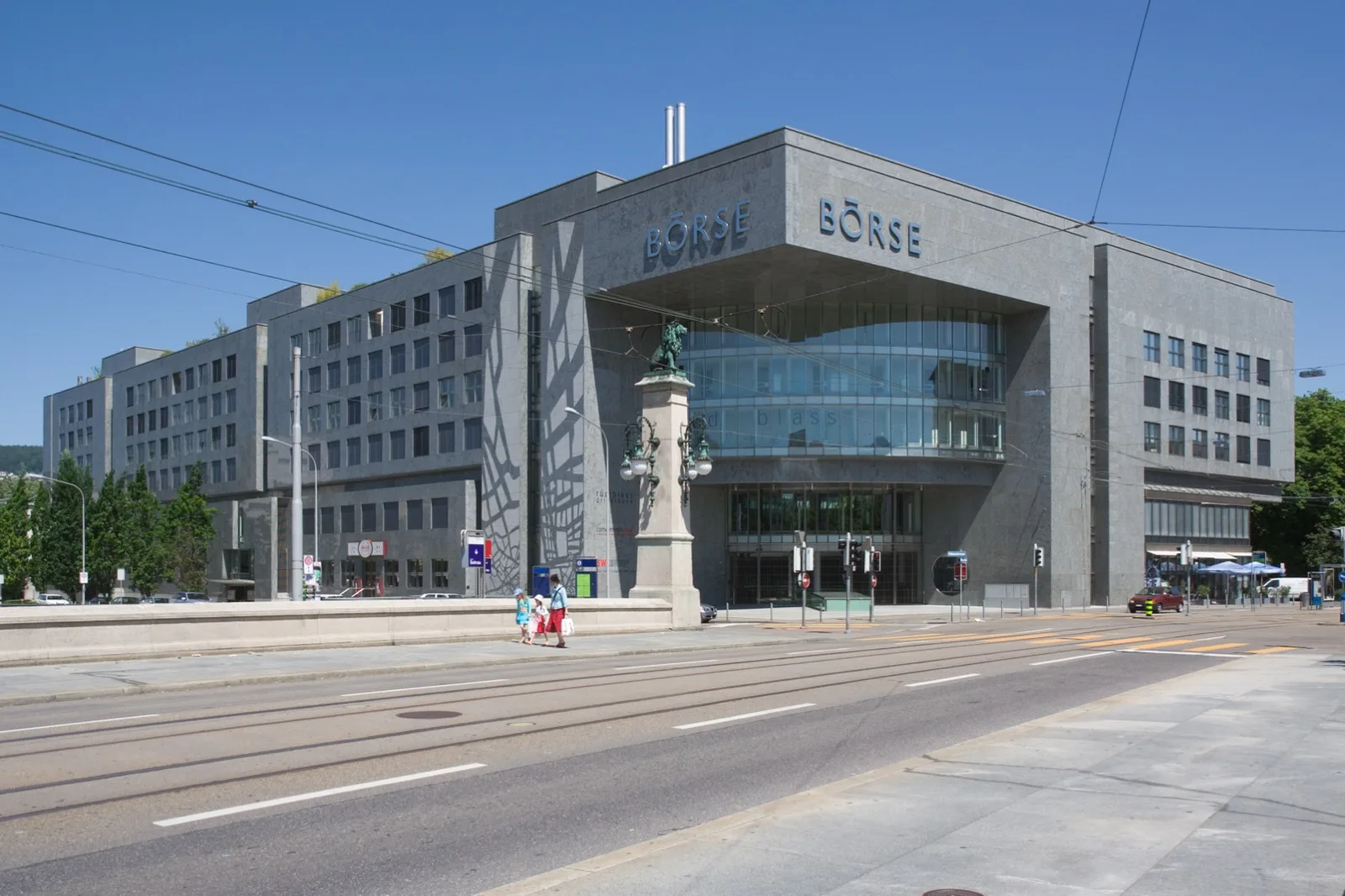
Trading is in Swiss francs. The equities segment covers blue chips, mid and small caps and rights, with more than 250 Swiss stocks admitted, among them Novartis, Roche and Nestle. Companies may hold a primary or secondary listing, and an issuer can open a second order book under its own security number to run a separate trading line. The exchange added the Auction Volume Discovery order type with release SMR11 on 15 May 2023, letting participants take auction liquidity without moving the uncross price. Sparks, the segment for smaller companies, runs an opening auction at 09:00 CET, continuous trading to 17:20 CET, then a closing auction and Trading at Last to 17:40 CET.
Sparks is a full listing, not a lighter regime, and its entry tests are explicit. A candidate needs a market capitalisation below CHF 500 million, a track record over 2 years, more than 50 investors, equity capital above CHF 12.0 million, a capital increase above CHF 8.0 million at the IPO unless equity capital already exceeds CHF 25.0 million, free float above 15 per cent of shares outstanding and free float market capitalisation above CHF 15 million. An issuer whose average market capitalisation passes CHF 1 bn over 12 months must move to the main market. On the main market, SIX says approval can follow within 20 business days of a complete filing. Depository receipts have been listable since 2007, under a revised framework in force from 25 July 2022. Infracore SA began trading on 9 July 2026 at CHF 54.00 a share, a market capitalisation of CHF 826 million.
The reference benchmark is the Swiss Market Index, the 20 largest and most liquid Swiss companies. The Swiss Performance Index covers almost every listed company, the SMIM tracks the 30 largest mid caps outside the SMI, and SPI Extra holds the SPI names the SMI does not.
Debt is the quieter and more international half of the market. Around 3,000 bonds from over 580 issuers are listed, in all major currencies, with issue sizes that average CHF 200-250 million. In 2025 the exchange recorded 558 bond listings, up 18 per cent on 2024, and a listed volume of CHF 124 billion, up 15 per cent. Swiss franc paper can enter the Swiss Bond Index, which requires at least CHF 100 million nominal per issue, a straight fixed-rate structure, at least one year to maturity and an SBI composite rating of BBB or better. SIX calculates more than 300 bond indices. GSN covers Swiss issuers in pharmaceuticals, food, banking and insurance, plus the life sciences cluster SIX puts at roughly a third of European free float in that sector.
 lobal Securities News