 lobal Securities News
Andrada Mining reports high-grade lithium intersections at Lithium Ridge in Namibia
The AIM-listed tin and critical metals producer said drill hole LRD097 intersected 35.59 metres at 1.52 percent lithium oxide.
Latest equities, bonds, and regulatory news from United Kingdom, updated daily.
The United Kingdom’s cash equity market is centred on the London Stock Exchange, which runs two distinct venues: the Main Market, a regulated market for listed securities, and AIM, its market for smaller and growing companies. AIM opened on 19 June 1995 and is regulated by the Exchange itself rather than through the statutory listing regime. The Financial Conduct Authority is the listing authority and the conduct regulator. Its UK Listing Rules sourcebook, UKLR, decides who may be listed and on what continuing terms, and the Exchange’s own rulebooks govern how the resulting securities trade.
Admission to listing has hard gates. The securities must be admitted to trading on a regulated market for listed securities, must be freely transferable, and shares must be fully paid and free of liens. The expected aggregate market value of the securities at admission must be at least 30 million pounds for shares and 200,000 pounds for debt securities, while shares of a closed-ended investment fund or open-ended investment company must reach 700,000 pounds. The FCA may admit securities of a lower value if it is satisfied there will be an adequate market. A sufficient number of shares is taken to have been distributed to the public when 10% of the shares in issue at admission are in public hands.
Listings sit in categories rather than one undifferentiated pool. The equity shares (commercial companies) category, the equity shares (shell companies) category and the closed-ended investment funds category each carry their own continuing obligations, and the FCA may require an issuer in any of them to appoint a sponsor where it sees a possible breach of the listing rules, the disclosure requirements or the transparency rules.
AIM works on a different principle. An applicant must appoint a nominated adviser and an AIM company must retain one at all times. That adviser is responsible to the Exchange for assessing whether the applicant is appropriate for AIM and for guiding the company on its obligations. If an AIM company ceases to have a nominated adviser, the Exchange suspends trading in its AIM securities, and the company has one month to appoint a replacement. Trading in AIM securities runs under the Rules of the London Stock Exchange.
The benchmark family is the FTSE UK Index Series, run by FTSE Russell under ground rules at version 17.2, July 2026. The FTSE 100 holds the largest 100 UK companies by full market capitalisation, the FTSE 250 the next 250 outside it, and the FTSE 350 combines the two. The FTSE SmallCap takes the FTSE All-Share companies too small for the FTSE 350, and the FTSE All-Share aims to cover at least 98% of the full market capitalisation of all eligible companies. Periodic reviews use buffers rather than a single line: a company enters the FTSE 100 if it has risen to 90th or above and leaves if it has fallen to 111th or below, with the equivalent bands for the FTSE 250 set at 325th and 376th.
GSN covers admissions, cancellations and transfers between the Main Market and AIM, FCA rule changes that move the listing gates, index reviews, and issuer announcements released through a regulatory information service.
Sources
This overview is based on the official documents listed below, last checked 2026-09-03. Figures are as stated in those documents.
London-based OKYO Pharma has enrolled the first patients in a Phase 3 trial for a painful eye condition with no FDA-approved treatment. The start is real. The answer is still a trial away.

The AIM-listed tin and critical metals producer said drill hole LRD097 intersected 35.59 metres at 1.52 percent lithium oxide.
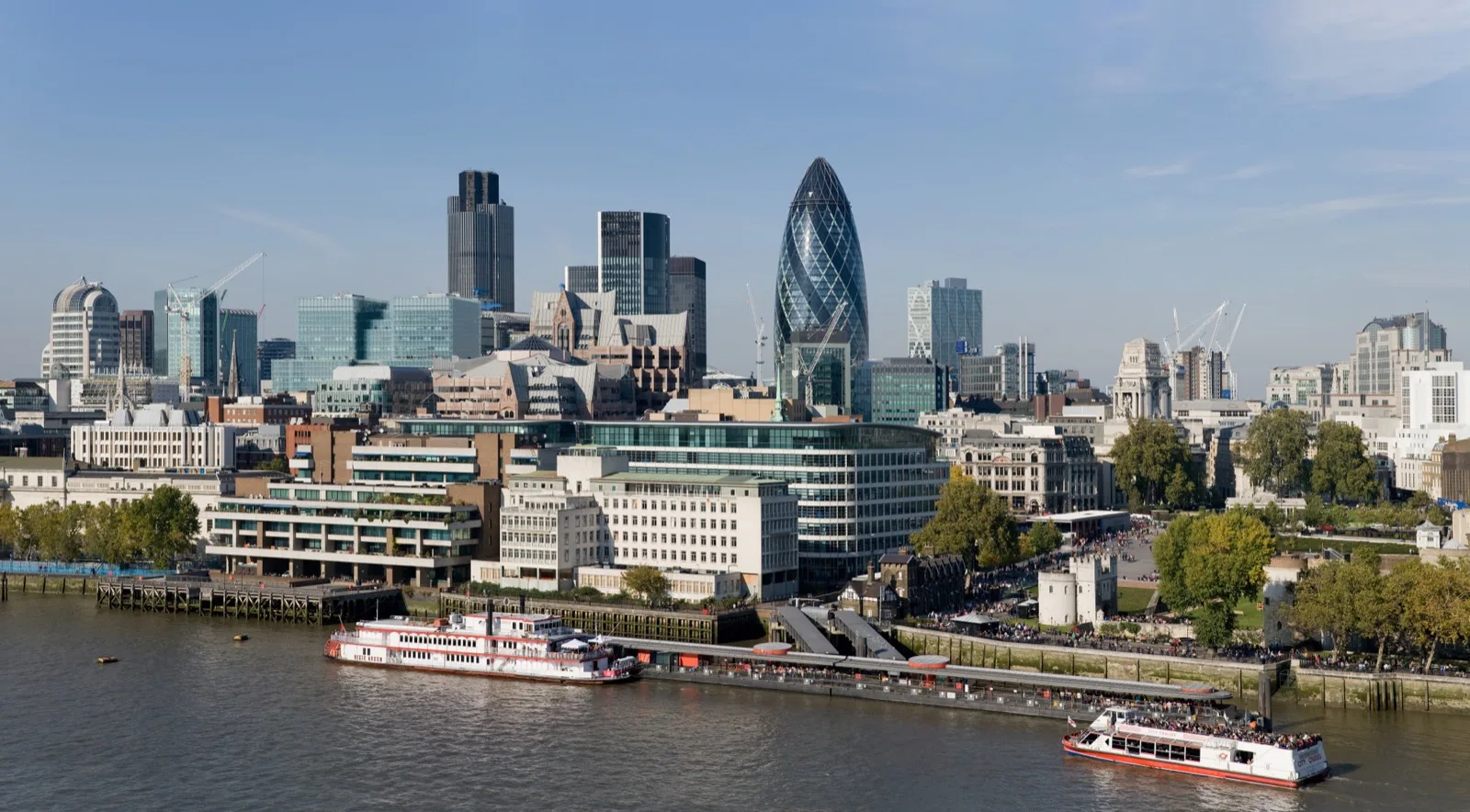
The AIM-listed technology group said its Densitron brand will supply customized displays for an electric delivery vehicle application.

The Africa-focused energy company said seven-month cash collections reached 247.9 million dollars and revenue rose 10 percent.

The AIM-listed diagnostics data firm said the study will evaluate up to 20 next-generation sequencing assays across US laboratories.

The listed SpaceTech investor said the C Share investment takes deployed proceeds past 40 million pounds, triggering partial share conversion.

The UK infrastructure group reported half-year revenue of 543.1 million pounds and raised its interim dividend to 2.0p per share.

The AIM-quoted computer vision company said it will deliver a robotics proof-of-concept for a global industrial technology company.

The AIM-quoted AI services firm said new and repeat orders in Chile, the UK and North America total $87,000 in contract value.

The digital transformation group said the three-year award remains subject to final signature after a standstill period that ended on 30 July.

The RF technology maker reported adjusted EBITDA of £11.3m and said its order book covers about 90 percent of market expectations for FY2027 revenue.

The AIM-listed group said its Wind Energy Services platform is on track for £17m to £18m of full-year revenue, with a £50m medium-term target.

The human challenge trial specialist reported H1 2026 revenue of £16.3m and said proposal volumes are up around 45 percent year on year.

The AIM-listed chip designer said a European satellite communications customer placed follow-on orders for its ENS92040 distributed digital beamformer.

The AIM-listed software group said revenue rose to £57.7m and cloud annual contract value grew 37 percent, with AI products in over 40 percent of new orders.

The Greenland-focused miner said Main Vein drilling in the Mountain Block averaged 42.8 g/t gold, with a best intercept of 132.5 g/t over 0.50 metres.

The UK construction group said adjusted pre-tax profit will land at the top end of analyst forecasts of £51.4m to £53.4m for the year to 30 June 2026.

A single London plumbing system decides who learns a listed company's earnings first, and the rule is that nobody should. Here is how it actually works.

A look at how underwriters use the over-allotment option, nicknamed the greenshoe, to manage price swings in the weeks after a London IPO.
A net short position of 0.2% of a company's issued share capital has to be reported to the FCA. Here is how that threshold works under the Short Selling Regulations 2025, what gets published, and what the regime deliberately does not cover.

An explainer on the gilt strips market, where the coupon and principal payments of a UK government bond are separated and traded as individual zero-coupon instruments.

UK Stamp Duty Reserve Tax adds 0.5% to most purchases of UK-incorporated shares and is collected automatically through the settlement system, but shares on London's AIM market are structurally exempt.

Auctions raise most of the money the UK government borrows each year. Here is how the Debt Management Office structures them, who is allowed to bid, and what the 2026-27 remit puts on offer.

A UK take-private can hinge on a single shareholder vote threshold rather than a simple majority. Here is how a scheme of arrangement differs from a contractual offer.

The UK's Market Abuse Regulation covers far more than trading on secret tips. Here is what it actually bans, and why the scope is wider than most people assume.

A UK rights issue hands existing shareholders new shares at a discount, but the mechanics of dilution and pre-emption mean the outcome depends entirely on what an investor chooses to do next.