lobal Securities News
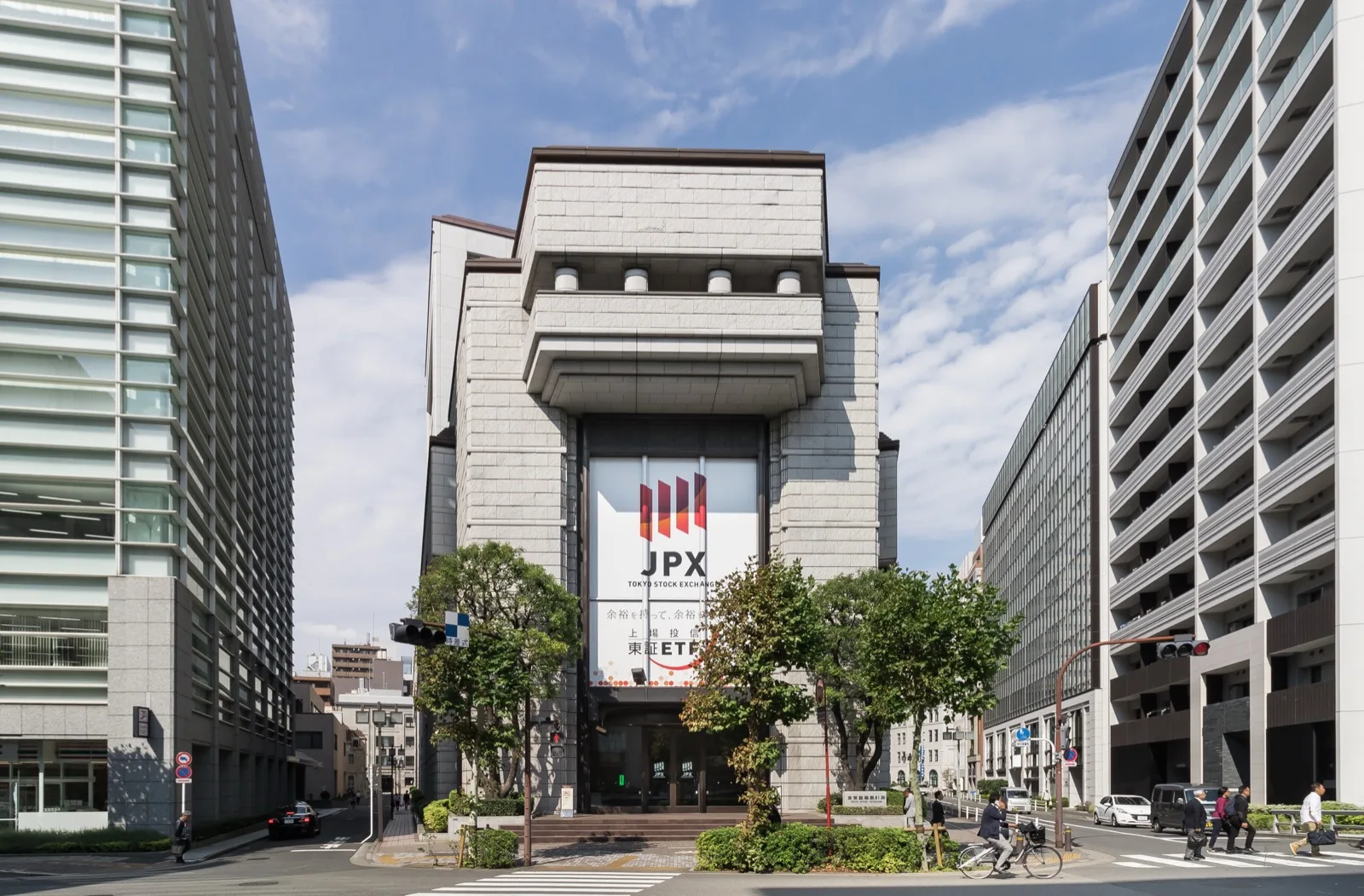
TIER IV, Inc. (TSE: 593A) started trading on the Growth Market of the Tokyo Stock Exchange on July 22, 2026 at an offering price of 1,085 yen per share, the top of an indicated range of 1,015 to 1,085 yen. The exchange’s Listing Department approved the issue on June 29, 2026 and published an outline of the initial listing issue, which the company revised for public offering and secondary distribution data effective July 13, 2026.
The company develops autonomous driving systems and platforms built on Autoware, the open source autonomous driving software, and the exchange classifies it under Information and Communication with code 593A and ISIN JP3539190003. Its registered office is at 1-12-10 Kitashinagawa in Shinagawa-ku, Tokyo, and KATO Shinpei is founder and chief executive.
How the offering was built
Pricing followed the book building method. Provisional conditions were set on July 6, 2026, the book ran from July 6, 2026 to July 10, 2026, and the price was fixed on July 13, 2026. Subscriptions were taken from July 14, 2026 to July 17, 2026, payment fell on July 21, 2026 and settlement on July 22, 2026, the listing day itself.
The public offering consisted of 17,449,600 newly issued shares, of which 6,365,900 shares were allocated to the domestic offering and 11,083,700 shares to the overseas offering. Alongside it, 3,968,400 shares were sold by existing holders in a placement underwritten and purchased by the principal underwriting participants, and a further 3,212,700 shares were placed under an over-allotment scheme. The named original share offerors were JAFCO SV5 Shared Investment Limited Partnership with 1,444,000 shares, UTEC 4 Limited Partnership with 942,000 shares and SMBC Trust Bank Ltd. through a specific operation money trust account with 500,000 shares, with the balance from unnamed holders.
Mitsubishi UFJ Morgan Stanley Securities and SMBC Nikko Securities were the managing trading participants. The underwriting group also took in Morgan Stanley MUFG Securities, Daiwa Securities, Nomura Securities, Mizuho Securities, SBI Securities, Monex, Rakuten Securities, IwaiCosmo Securities, Matsui Securities, Mito Securities, Okasan Securities and Tokai Tokyo Securities. Ernst and Young ShinNihon LLC is the auditor and Sumitomo Mitsui Trust Bank is transfer agent.
At listing the company had 63,524,090 shares issued including treasury shares, a count that already reflects the newly issued shares and which the exchange noted could rise further as share options are exercised, against an authorised 150,000,000 shares. The trading unit is 100 shares. The business year runs from October 1 to September 30 of the following year, the general shareholders meeting falls within three months of the year end, the record date is September 30, and record dates for surplus dividends are March 31 and September 30. The exchange also prohibited buy and sell market orders in the issue in transactions carried out up to and including the initial price determination date, the standard opening arrangement for a Japanese new listing.
The market the company chose
The Growth Market is defined by the exchange as the venue for companies that have a certain level of market value on the strength of disclosed business plans for high growth and their progress, while carrying relatively high investment risk from the standpoint of business track record. The formal requirements match that description. A Growth applicant needs 150 shareholders or more expected at the time of listing, at least 1,000 units of tradable shares, tradable share market capitalisation of 500 million yen or more and tradable shares equal to 25% or more of the listed stock, plus a public offering of at least 500 units by the day before listing.
There is no minimum market capitalisation, no net asset test and no profit or sales test at the point of entry, where the Standard Market requires positive net assets and profit for the last one year of 100 million yen or more, and the Prime Market requires consolidated net assets of 5,000 million yen or more. A Growth applicant needs one year of continuous business activity before the application day rather than the three years required on Prime and Standard.
The obligation arrives later. Growth Market listing maintenance criteria add a market capitalisation test of 4,000 million yen or more, but only after 10 years of listing, alongside the same shareholder and tradable share tests that applied at entry and a requirement for positive net assets.
Analysis: the structure says more than the price
The number worth pausing on is not the 1,085 yen print at the top of the range. It is the split of the primary offering: 11,083,700 shares went to the overseas tranche against 6,365,900 at home. A Growth Market listing is a domestic retail venue by construction, and the exchange’s own formal requirement is a public offering in Japan of 500 units or more with 150 shareholders. The majority of the primary book was placed abroad, with Morgan Stanley MUFG Securities sitting next to Mitsubishi UFJ Morgan Stanley Securities in the syndicate. The outline records that allocation and the identity of the underwriters; it does not state why the offering was structured that way.
The second structural point is the balance between primary and secondary. Of the shares placed, 17,449,600 were newly issued and 3,968,400 came from existing holders, with a further 3,212,700 available through the over-allotment scheme. Proceeds from the primary tranche go to the company; proceeds from the secondary do not. The venture holders named in the outline, JAFCO SV5 with 1,444,000 shares and UTEC 4 with 942,000, account for part of the 3,968,400 secondary shares, and that secondary tranche is less than a quarter the size of the 17,449,600 newly issued shares. The outline records that split; it does not state the use of proceeds or the holders’ reasons for selling.
What the outline establishes is limited. It confirms the price, the size, the syndicate, the share count and the timetable. It says nothing about revenue, losses, cash runway or contracted customers, because the Outline of Initial Listing Issue is not a financial document; those figures sit in the Initial Listing Application Securities Report, which the exchange notes is published in Japanese only. Anyone assessing the company on the exchange’s disclosure alone is assessing a capital structure, not a business.
Three things follow from the calendar rather than from the offering. The first full reporting cycle after listing ends on September 30, given the October to September business year, so the first annual figures as a listed company arrive on a schedule most Japanese issuers do not share. The second is the 10 year clock on the 4,000 million yen maintenance test, which starts at this listing date. The third is the lock-up and over-allotment mechanics: the 3,212,700 shares placed under over-allotment determine how much stabilisation supply sits above the market in the weeks after settlement, and the exercise of share options the exchange flagged determines how far the 63,524,090 share count moves from here.