 lobal Securities News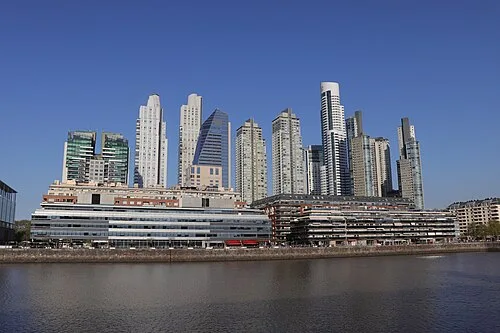
Lithium Argentina AG Announces $180M Investment and Joint Venture
Lithium Argentina AG finalized a joint venture for its Pozuelos-Pastos Grandes projects and secured a strategic investment from Ganfeng Lithium.
Latest equities, bonds, and regulatory news from Argentina, updated daily.
Argentina’s listed market runs through Bolsas y Mercados Argentinos, known as BYMA, which lists and trades equities, corporate and sovereign debt, funds and CEDEARs, the local depositary receipts over foreign shares. BYMA describes its own role as covering the whole life of a security, from listing through the primary placement system SICOLP, then secondary trading, entry into settlement and the final delivery or payment of the traded securities. New instruments arrive by issuer rather than by index review: the exchange recently admitted 13 new equity CEDEARs issued by Banco Comafi.
The regulator is the Comisión Nacional de Valores, which describes itself as the body responsible for the regulation, supervision, promotion and development of the capital market. The governing statute is the Ley de Mercado de Capitales, Ley 26.831, whose article 2 defines what counts as a negotiable security. That definition now carries weight beyond equities and bonds, because Ley N° 27.739 made the CNV the regulator of virtual asset service providers, and the CNV has published a notice stating that its competence extends to those providers and not to virtual assets themselves unless a given asset qualifies as a negotiable security under article 2. Below the statute the CNV legislates by Resolución General, with recent numbers running to 1103/2026, 1098/2025, 1086/2025 and 1058/2025, supplemented by Ministry of Economy resolutions such as 1/2026 that set fees and charges.
BYMA classifies its listed issuers by sector, using categories a reader of global indices will recognise: Finanzas, Energía, Materiales, Industrial, Salud, Bienes Inmobiliarios, Consumo Discrecional, Productos de Primera Necesidad, Servicios de Utilidad Pública, Servicios de Comunicación and two technology groupings covering software, IT services and telecommunications. Each issuer record on the exchange carries the ticker, the ISIN, the sector, the fiscal year end and the registered domicile, and flags membership of the S&P BYMA General index and of the exchange’s sustainability index. The board mixes financial names such as A3 Mercados with industrial and materials producers such as Agrometal and Aluar Aluminio Argentino, several of them domiciled outside Buenos Aires.
Prices in this market are set against a peso whose cost of money the Banco Central de la Republica Argentina publishes daily. Its reference exchange rate table for 2026-09-02 put the United States dollar at 1511 pesos. International reserves stood at 48259 million dollars on 2026-08-31 and the monetary base at 47451537 million pesos on the same date. The central bank also publishes the peso interest rate series that price local funding, among them the BADLAR and TM20 rates for private banks, the BAIBAR interbank rate, the average rate on thirty day deposits, current account overdraft rates and personal loan rates, each updated daily. Those series matter to any reading of an Argentine issuer, because peso rates move both the discount applied to local earnings and the relative appeal of sovereign paper against equity. GSN covers BYMA listings and CEDEAR admissions, CNV resolutions and enforcement, and the central bank series that reprice the market.
Sources
This overview is based on the official documents listed below, last checked 2026-09-03. Figures are as stated in those documents.
A short letter from Buenos Aires splits one technology division into two, with AI and engineering each reporting straight to the Executive Chairman. The structure is clear; what it is meant to deliver is not yet spelled out.
Lithium Argentina AG finalized a joint venture for its Pozuelos-Pastos Grandes projects and secured a strategic investment from Ganfeng Lithium.
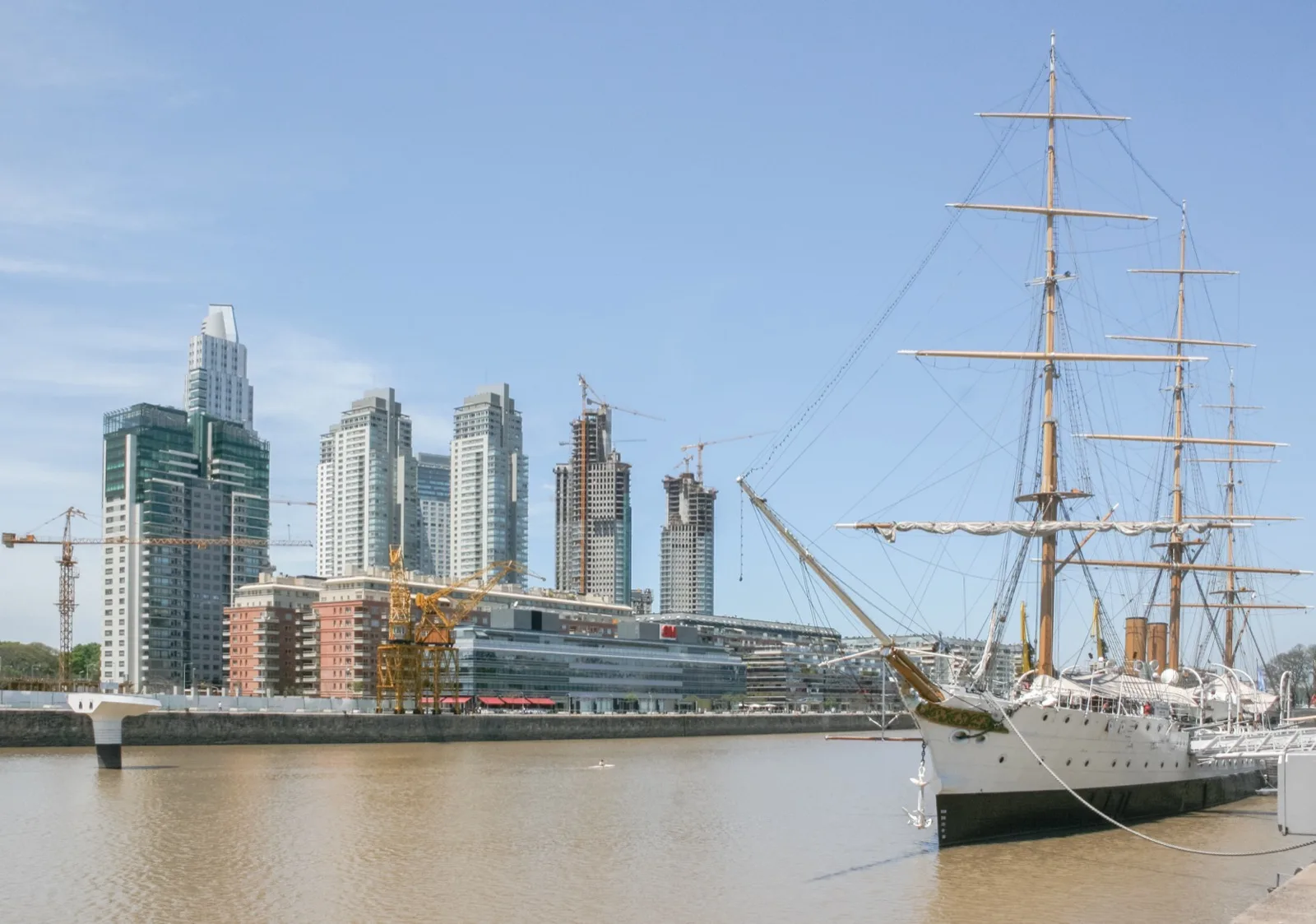
Cresud will pay the fifth installment of interest and capital on its USD 10,199,068 Series XLV Fixed Rate Notes, with interest of USD 204,540.21.

Edenor said YPF accepted its US$780 million offer for 70% of MetroGAS and 5% of MetroENERGIA, with closing subject to gas and power regulator approval.
The Argentine cement producer posted second quarter net sales revenues of Ps. 238,053 million, up 2.1%, with adjusted EBITDA margin down 97 basis points.

The Argentine gas transporter more than doubled quarterly comprehensive income and confirmed a US$ 3.0 billion final investment decision on its NGLs project.

IRSA signed a barter agreement for a 2,360 sqm lot with an estimated saleable area of 4,500 sqm in the extended first stage of Ramblas del Plata.

Resolution No. 1025/2026 admits Pampa Energia's US$4.522 billion Rincon de Aranda development in Vaca Muerta to Argentina's RIGI incentive regime.

A structural accounting rule requires Argentine companies to restate their financial statements in constant currency. Here is how RT 6 works and why it complicates comparing results across companies and periods.

A look at how the simplified regime the CNV designed for small and medium enterprises reduces disclosure and capital requirements compared with a standard IPO on BYMA.

The same government bond can turn from pesos into dollars without the money ever crossing a bank border. Here is how contado con liquidación, the MEP dollar, and the CNV's parking rules actually work.
A little-visible mechanism recalculates every day, even on holidays, how much billions of dollars in Argentine debt are worth in pesos. Here is how CER indexation works, and why it should not be confused with currency risk.

Without opening a foreign account or buying foreign currency, an investor can end up exposed to a stock trading thousands of kilometers away. The key lies in custody, the conversion ratio, and an exchange rate no one publishes, but that the price reveals.

A shareholder with just a handful of shares can receive the same price paid for control. Here's how public acquisition offers work in Argentina's market.

An overview of the periodic reporting and material-facts regimes through which Argentina's securities regulator monitors what listed companies tell the market.
When a country borrows in dollars instead of its own currency, it takes on a risk determined by the currency's value on payment day, not by domestic policy.

A technical overview of public bond restructuring mechanisms, the clauses that bind minority investors, and the differences between participating and opting out.

Some Argentine bonds include an additional instrument that only pays out when economic growth exceeds certain thresholds. Here's how it's calculated and how it's triggered.