lobal Securities News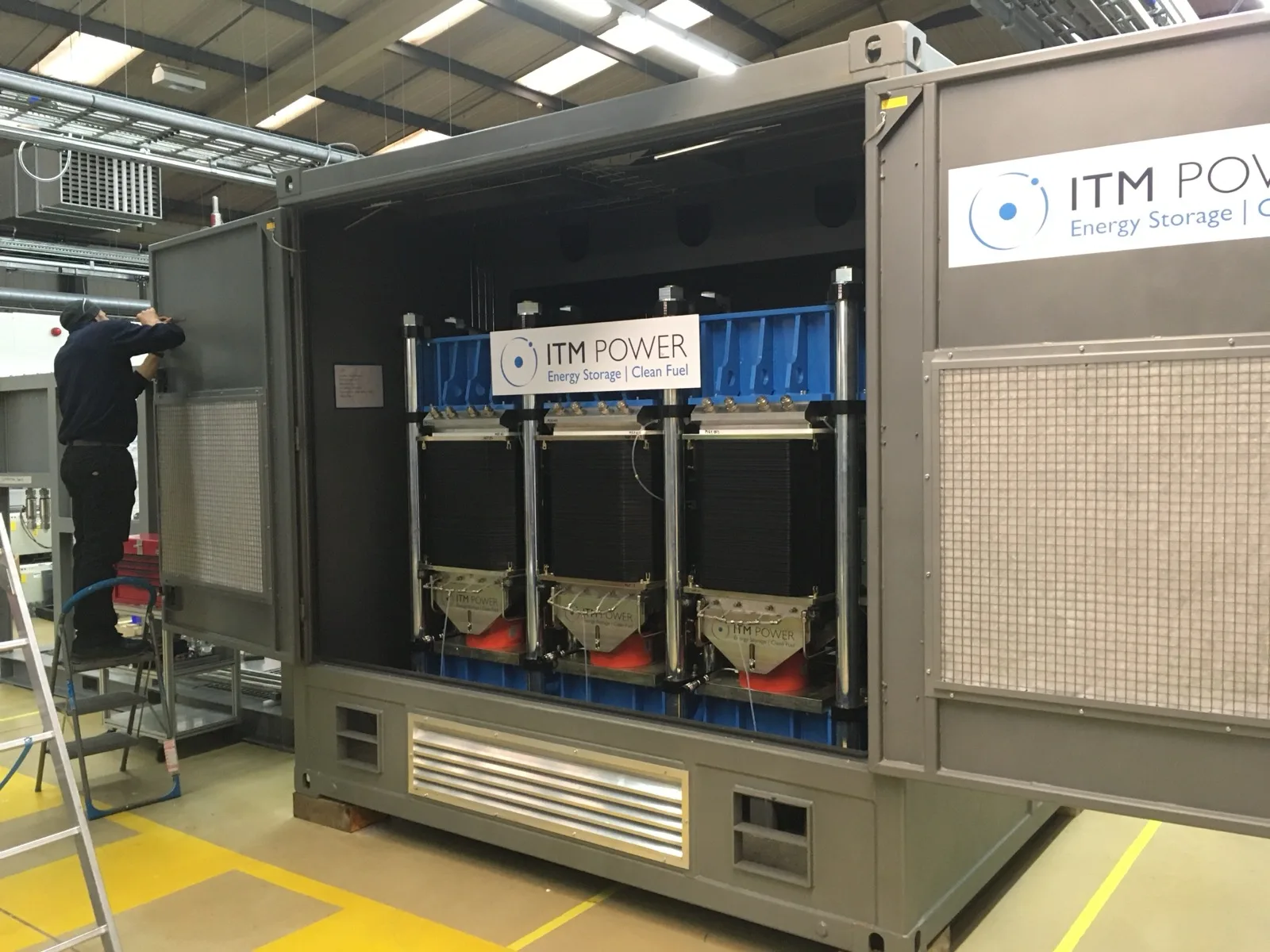
Analysis: what the automation step changes in test hours and in cost
Automating a test rig is usually presented as acceleration. The filings show a second effect. NewHydrogen’s R&D line more than doubled year on year in both the quarter and the half, and the company names research agreement and consultant costs as the drivers. Continuous unattended running spreads a fixed engineering headcount over more test hours; it does not require more engineers. For a company with $788,355 of working capital and a stated four month runway, hours of data per dollar of payroll is the constraint that matters, and that is precisely what the announced change addresses.
The timing also lines up with the company’s own capital forecast. Management says it does not expect increased expenses until early 2027, when prototyping ramps up. An automated ETU commissioned during 2026 would generate the run-to-run repeatability data that a pilot plant specification needs before that heavier spending begins. The sequence is internally consistent. The market sizing is a separate matter: the $12 trillion figure is attributed to a third party estimate of a future market and has no bearing on whether the chemistry works at scale.
What the disclosure does not establish is any performance result. Passing an internal stage gate is a company-defined event with no external referee. The release contains no hydrogen yield, no conversion efficiency, no operating temperature and no cost per kilogram against which the Department of Energy’s $1/kg target could be measured. The patents are applications with options to negotiate licences, not granted patents under licence. A reader tracking this company from filings alone would watch three things: whether the ETU is actually built and running, whether R&D expense in the second half of 2026 stays near the first half rate or steps up, and whether the equity financing agreement continues to supply cash at a pace that covers a widening loss without the going concern language changing.
What the documents say
NewHydrogen, Inc. (OTCQB: NEWH) said on July 7, 2026 that it plans to automate the controls on the engineering test unit it is building for ThermoLoop, its thermochemical water splitting process. The company frames the step as a way to run the unit continuously rather than only when an engineer is standing in front of it, and to shorten the time needed to gather the data that will set the specifications for a first commercial pilot plant.
The announcement is an engineering milestone rather than a financial one. No contract value, capital budget or completion date accompanied it. What the disclosure does establish is where NewHydrogen believes it sits on its own development ladder, and the quarterly report it filed six weeks later gives the cost of standing there.
What the company disclosed
NewHydrogen describes the engineering test unit, which it abbreviates to ETU, as the bridge between bench scale laboratory experiments and a pilot plant, built specifically to prove the fundamental physics, chemistry and kinetics of ThermoLoop. The company calls the use of an ETU the standard, industry-accepted pathway for designing a commercial pilot plant. Automating the controls is intended to give the engineering team around-the-clock testing capability with greater precision and repeatability from run to run.
Chief executive Steve Hill tied the change to engineer time rather than to throughput alone. “Manual testing demands constant attention from our engineers just to keep a run on track.” He said automation frees the team to spend more of its time interpreting data and refining the engineering decisions that lead to a pilot plant.
The company placed the plan alongside two earlier disclosures: that it had passed what it calls Stage Gate One and moved from a research phase into an engineering phase, and a collaboration with NuCube Energy to examine nuclear powered hydrogen production. Neither of those has an outcome attached in this release.
The technology claim and the official baseline
ThermoLoop is presented as a route to clean hydrogen that uses water and heat rather than electricity. In its annual report for the year ended December 31, 2025, NewHydrogen argues that conventional electrolysis is limited by thermodynamics and by input costs: the theoretical voltage to split water is 1.23V, while an industrial electrolyzer runs closer to 2V, and the company cites the National Renewable Energy Laboratory for the point that platinum and iridium account for nearly 50% of the capital cost of a proton exchange membrane electrolyzer. Citing the 2022 Oxford Institute for Energy Studies, the company says electricity accounts for nearly 73% of the cost of hydrogen production. Its press release repeats the 73% figure and cites a Goldman Sachs estimate of a $12 trillion future market value for clean hydrogen.
The US Department of Energy’s own description of electrolysis is more measured and is useful as a baseline. The department notes that hydrogen from electrolysis can carry close to zero greenhouse gas emissions depending on the electricity source, but that production cost must fall substantially to compete with natural gas reforming. Its stated research target is $1/kg for hydrogen by 2030, after an interim target of $2/kg by 2025. The department also records that solid oxide electrolyzers running at roughly 700 to 800 degrees Celsius can use heat at those temperatures, including nuclear heat, to cut the electrical energy needed. Heat as a substitute for electricity is therefore not a claim unique to NewHydrogen; what is specific to the company is the thermochemical looping chemistry it is testing with a team at UC Santa Barbara.
The intellectual property behind that work is jointly filed. On March 5, 2025 the company and UC Santa Barbara filed application 63/767,269, and on October 16, 2025 application 63/900,606, covering materials and methods for producing chemicals by thermochemical looping. NewHydrogen holds an option to negotiate an exclusive licence for each. It has no licence today.
What the filings show about funding
The quarterly report for the period ended June 30, 2026 sets the engineering phase against a small balance sheet. Research and development expense for the three months to June 30, 2026 rose by $195,007 to $342,874, from $147,867 a year earlier, an increase the company attributes to research agreement and consultant costs. For the six months, R&D rose by $425,002 to $674,387 from $249,385. General and administrative expense for the quarter was $464,318 against $381,053.
The company reported no revenue. Net loss for the quarter was $917,822 against $623,704 a year earlier, and $1,740,818 for the six months against $1,099,798. Operations consumed $1,460,435 of cash in the half, compared with $1,003,615 in the same period of 2025, while financing brought in $763,035 through shares issued under an equity financing agreement, against nothing a year earlier.
At June 30, 2026 the company reported working capital of $788,355, down from $1,433,163 at December 31, 2025, and a shareholders’ deficit of $2,643,279. Its auditors expressed substantial doubt about its ability to continue as a going concern in the report on the 2025 accounts. Management states that current cash and investment balances are sufficient to support development activity and general and administrative expenses for the next four months, that additional cash will be required during 2026, and that expenses are not expected to increase until early 2027, when prototyping of the thermochemical water splitting technology ramps up.