lobal Securities News
Analysis: an agency model that shows up on the balance sheet, not the income statement
The distinctive feature of this company is that it manages assets it does not own. Non-current assets were QAR 14.7 million at 30 June 2026, against current assets of QAR 236.2 million. Total assets fell to QAR 250.9 million from QAR 276.7 million at the end of 2025, a decline of QAR 25.8 million, even though the company paid out QAR 45.5 million in dividends, or QAR 0.65 per share, during the half. Operating cash flow of QAR 39.6 million and a fall in trade and other receivables to QAR 46.2 million from QAR 59.3 million did most of the work in closing that gap.
The liability side moved further. Total liabilities fell to QAR 97.2 million from QAR 139.1 million, with current liabilities down to QAR 80.3 million from QAR 122.2 million and non-current liabilities unchanged at QAR 16.9 million. Equity rose to QAR 153.7 million from QAR 137.5 million, with share capital held at QAR 70.0 million, the legal reserve up to QAR 13.6 million from QAR 11.5 million and retained earnings up to QAR 70.2 million from QAR 56.0 million. The company describes the structure as debt free.
The 2025 accounts explain why the current-year balance sheet looks the way it does. Total assets at 31 December 2025 were QAR 276.7 million against QAR 167.9 million a year earlier, and total liabilities QAR 139.1 million against QAR 29.3 million, movements the company attributes primarily to an amount due to a founding shareholder arising from the listing and to dividends payable on the QAR 42.0 million declared on 17 November 2025. On the movements disclosed, the first half of 2026 reflects the settlement of those balances rather than a change in the operating business.
What the disclosures establish is a low capital, cash generative agency book that can pay out most of what it earns. What they do not establish is contract-level economics: the presentation gives no value, term or margin for the QatarEnergy headquarters joint venture or the three-year government award, and the port mandate is described in scope rather than in money. A reader would look next at whether the manpower secondment line keeps growing faster than the core facilities management line, since it grew from a much smaller base at what appears to be a different margin, and at whether the joint venture loss recurs once the contract nearing completion ends.
What the documents say
Mosanada Facilities Management Services (QSE: MFMS) grew revenue in its first half as a listed company while its margin narrowed. The Qatari facilities management provider reported revenue of QAR 77.6 million for the six months to 30 June 2026, up 6.1% from QAR 73.1 million, and total comprehensive income of QAR 20.3 million against QAR 20.2 million. Measured against revenue, that income margin eased to 26.2% from 27.6%. The company set out the figures in an investor presentation dated 4 August 2026 drawn from its condensed interim financial statements.
Where the growth came from
Two revenue lines moved in the period. Manpower secondment services grew to QAR 13.5 million from QAR 10.3 million, while facility management services rose to QAR 64.1 million from QAR 62.8 million. The company attributes the increase to existing and newly awarded contracts. Gross profit rose to QAR 24.5 million from QAR 22.6 million.
Income did not follow revenue up. Mosanada reports that higher gross profit and higher finance income were partly offset by higher other operating expenses relating to regional expansion, and by a loss from joint ventures associated with a contract nearing completion. On the figures disclosed, revenue rose 6.1% while total comprehensive income was close to flat, and the income margin eased to 26.2% from 27.6%.
On the operational side the company reports two contract awards in the half. It was awarded the facilities management contract for the QatarEnergy headquarters through a joint venture, and a new three-year government facilities management contract. Mosanada describes both as reinforcing its position with institutional clients in Qatar.
The estate behind the numbers
Mosanada was founded in 2013 as a joint venture between Aspire Zone Foundation, the Qatar Olympic Committee and Cushman & Wakefield Qatar Holdings Pty Ltd, and it built its business as a facilities management agent in Qatar’s sports sector before extending into other asset classes. Its stated project record includes the FIFA 2022 World Cup, AFC 2023, EXPO 2023 and Formula 1, and its declared strategy is to diversify beyond sports and major events infrastructure into healthcare, education, defence and urban development.
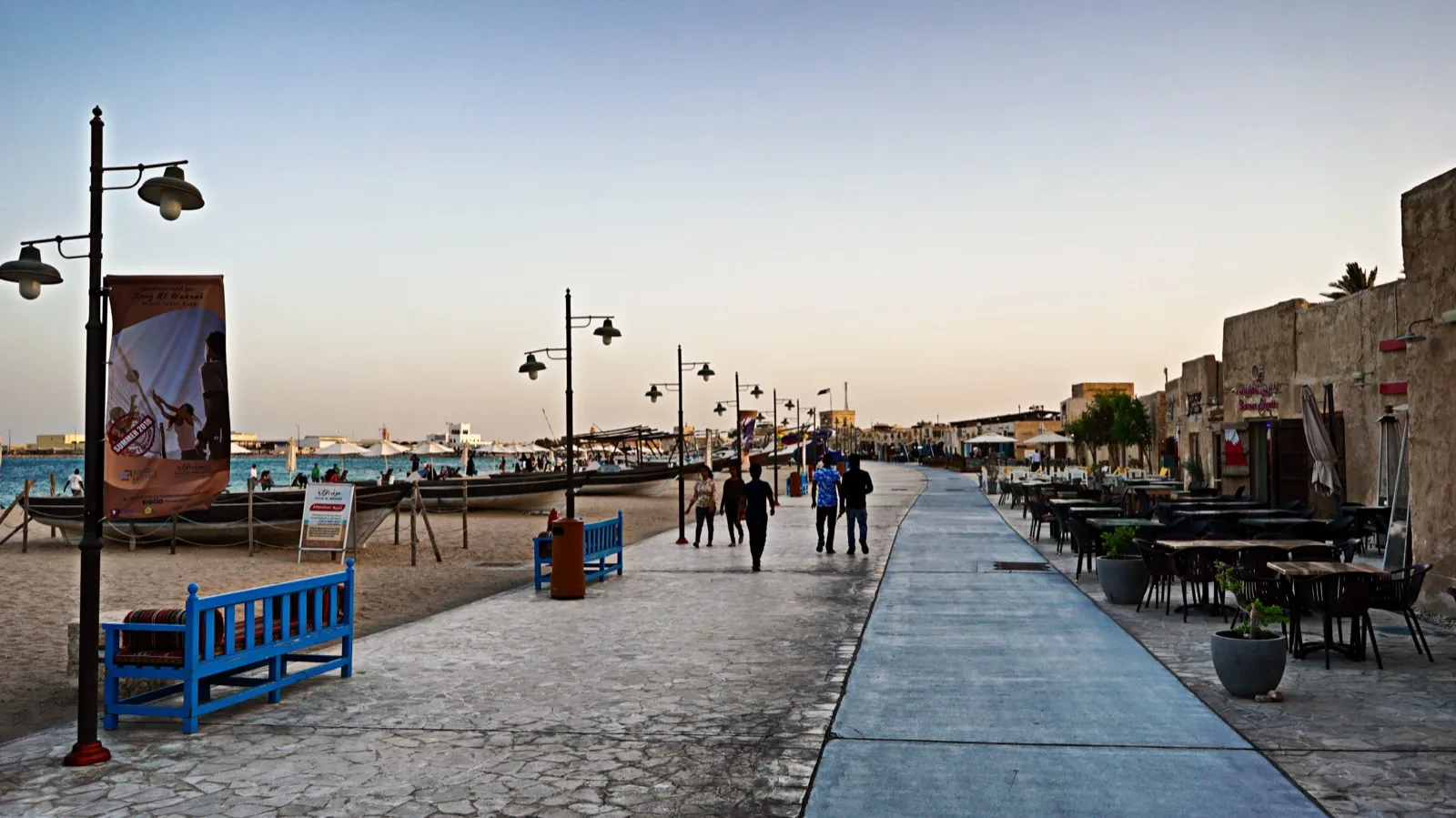
The largest non-sports asset in that portfolio is Old Doha Port. The company describes the redevelopment there as combining a cruise terminal, yacht marina, hotels, residential apartments, shops, restaurants and entertainment along a waterfront promenade, adjacent to the centre of Doha and close to the Museum of Islamic Art and the National Museum of Qatar. Mosanada says it provides all facilities management services to the port, including consultancy at design stages, preparation for handover and takeover of facilities, commercial procurement of facilities management services, management of the supply chain and operations and maintenance activities, and operation of the marina.
The comparison with a full year
Revenue for the year to 31 December 2025 was QAR 145.5 million against QAR 148.6 million in 2024, a decrease the company attributes to the full year impact of two facilities management contracts renewed at revised lower contract values. Total comprehensive income for 2025 was QAR 40.3 million against QAR 54.0 million, reflecting the margin profile of those renewed contracts and a lower share of profit from joint ventures after the 2024 conclusion of the venture that delivered facilities management and event services for the Public Works Authority during Expo 2023. Administrative expenses fell to QAR 6.7 million from QAR 8.2 million.
Set against that, a first half at QAR 77.6 million of revenue and QAR 20.3 million of comprehensive income puts the company slightly ahead of the 2025 run rate on the top line and roughly in line on income. The renewals that reset the 2025 base are now in the comparatives, so the growth reported in this half is growth against a lower reference point.
Reporting obligations
Mosanada was admitted to trading on the main market of the Qatar Stock Exchange on 15 December 2025. Under the QSE Rulebook, an issuer must send the exchange, in both Arabic and English, its annual, semi-annual and quarterly reports and any press release or information it determines affects the price of its securities. Rule 6.8.7 requires the issuer to publish an investor presentation and hold at least one investor conference call after each such report, chaired by the chairman, the chief executive, the chief financial officer or another member of executive management. The exchange states that it may publish what it receives without reviewing the content or the timing, and that the issuer remains solely responsible for it.