lobal Securities News
IRSA Inversiones y Representaciones S.A. (NYSE: IRS) told Argentine market authorities on July 30, 2026 that it had signed a barter agreement over a 2,360 sqm lot in the extended first stage of its Ramblas del Plata development in Buenos Aires. The company valued the transaction at USD 4 million and put the estimated total saleable area of the plot at 4,500 sqm.
The July agreement
The disclosure took the form of a letter filed with the Bolsa de Comercio de Buenos Aires and the Comision Nacional de Valores, then furnished to the United States Securities and Exchange Commission on Form 6-K in English translation. Saul Zang, the executive responsible for the relationship with the markets, signed it.
IRSA said the consideration would reach it through an upfront cash payment and saleable square metres to be received in the future. The letter does not disclose how the USD 4 million divides between those two legs, does not name the counterparty, and sets no delivery date for the built area IRSA is due to receive. It adds only that the company will continue infrastructure works on the Ramblas del Plata plot while advancing with the signing of commercialisation agreements.
That is the standard shape of an Argentine barter, or permuta. The landowner transfers a parcel and takes back a mixture of cash and a share of the finished product rather than a single sale price. The developer supplies the construction capital. For a listed landowner the arrangement converts a land bank into near term liquidity plus a claim on future units, without the company carrying the construction cost of that parcel on its own balance sheet.
Three agreements in ten weeks
The July lot was the second of three comparable transactions IRSA disclosed over the northern summer, and the smallest by value.
On June 26, 2026 the company reported a barter over a 6,947 sqm lot with an estimated total saleable area of 17,500 sqm, in the first stage of the project, for USD 14.175 million. On August 31, 2026 it reported a third, over a 2,095 sqm lot with an estimated total saleable area of 7,483 sqm, again in the extended first stage, for approximately USD 6.7 million. All three letters carry the same closing language about continuing infrastructure works and signing further commercialisation agreements, and all three were signed by Zang.
The three disclosures use consistent units, which makes them comparable on their face: land area of the lot, estimated total saleable area, and a headline transaction value. What they do not share is a common ratio between land and saleable area. The June parcel in the first stage and the two later parcels in the extended first stage carry different densities of estimated saleable area per unit of land, and IRSA does not explain in the letters whether that reflects zoning within the master plan, the mix of uses envisaged for each lot, or the terms negotiated with each counterparty.
The project and the balance sheet around it
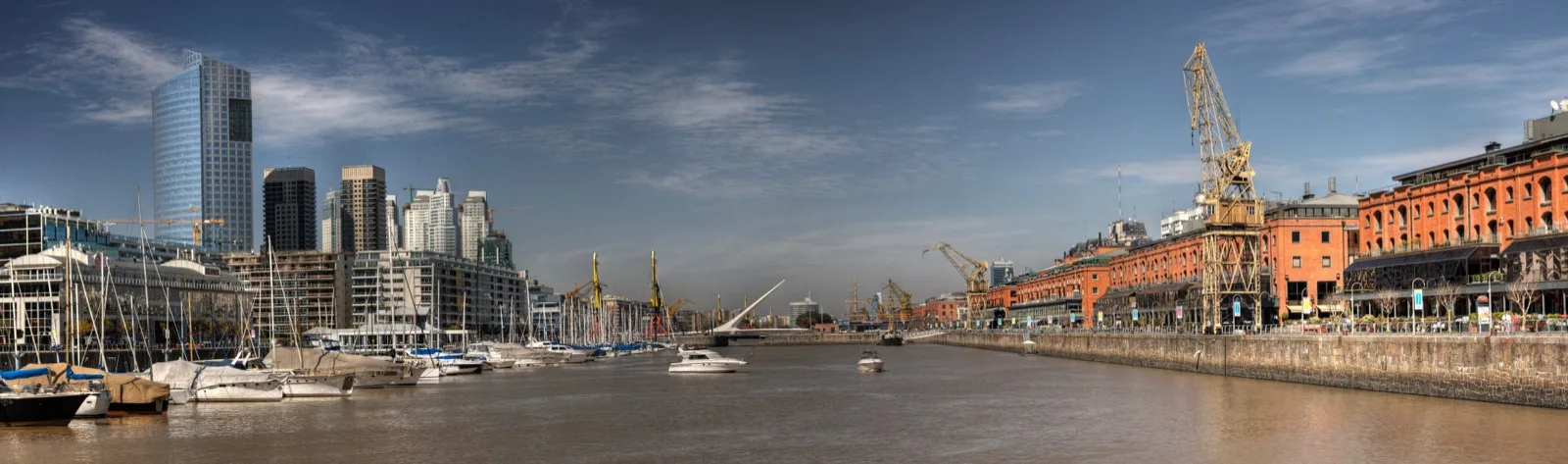
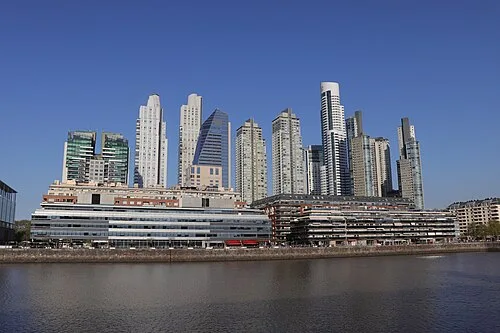
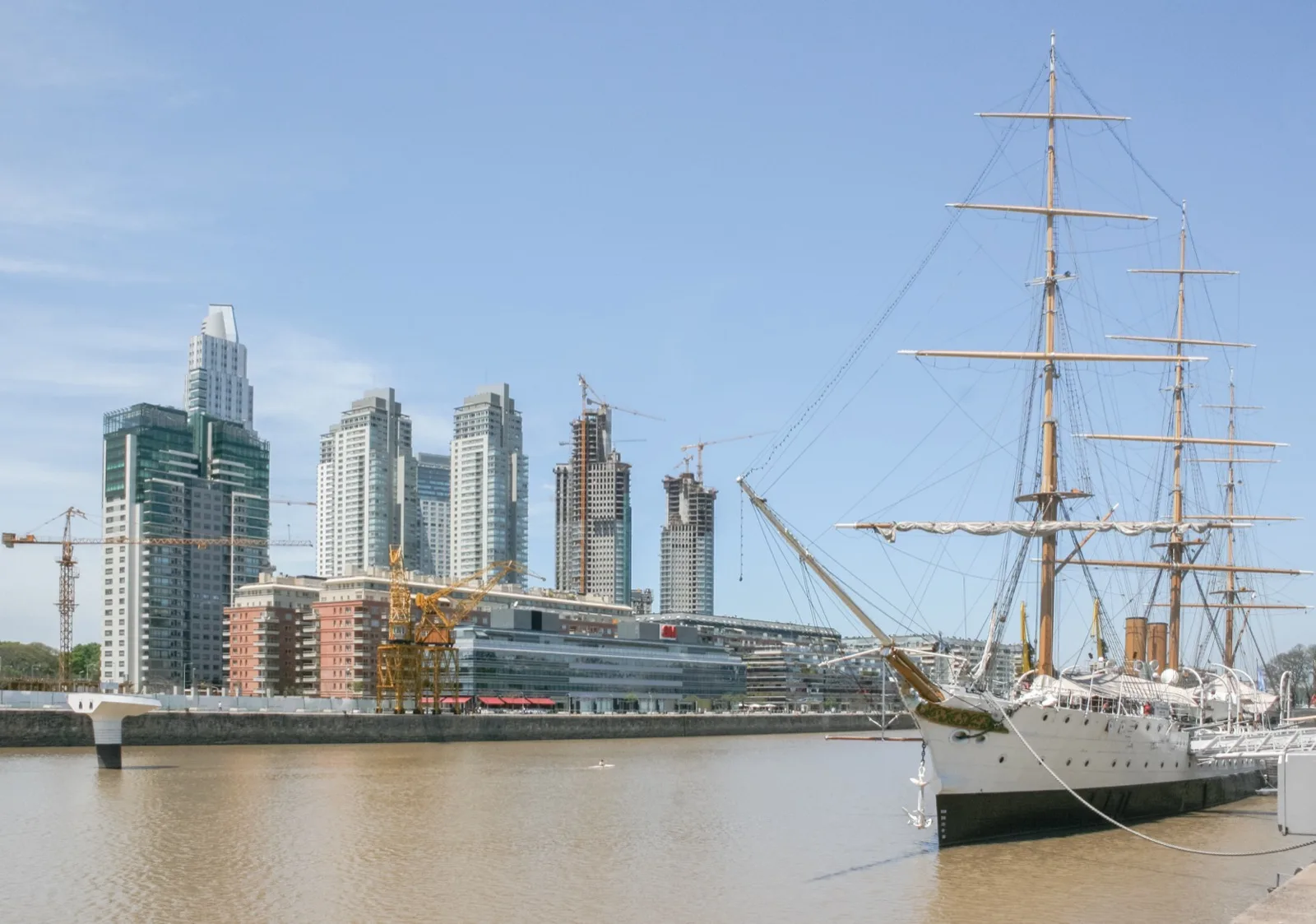
IRSA describes Ramblas del Plata on its own website as a project to make a city within a public private agreement framework, on a site it characterises as exceptional for its size, location and connectivity, and as a way for Buenos Aires to recover access to its riverfront while creating a new mixed use neighbourhood. The company groups it under residential projects alongside its shopping malls, offices, hotels and land reserves, and dates the launch of its residential projects, Ramblas del Plata included, to the period after its merger with IRSA Propiedades Comerciales.
The barter notices sit alongside a steady run of debt service disclosures from the same issuer. Filings from July and August 2026 cover interest payments on three dollar denominated series. The Series XXII notes, issued on October 23, 2024 in a principal amount of USD 15,799,810 and due 2027, carry an annual nominal rate of 5.75% and paid their third interest instalment from July 23, 2026. The Series XXIII notes, issued the same day in a principal amount of USD 51,467,822 and due 2029, carry 7.25% and paid USD 1,850,373.96 of interest on the same date. The Series XVIII notes, issued on February 28, 2024 in a principal amount of USD 21,408,926 and due 2027, carry 7.00% and began paying their fifth instalment of USD 743,153.68 on August 28, 2026. Caja de Valores S.A. acts as payment agent on all three.
Analysis: what a barter notice does and does not establish
A barter letter is a signing announcement, not a revenue event. What IRSA has disclosed is that a contract exists over a defined parcel at a stated valuation. It has not disclosed when title passes, when the cash leg is received, when the square metre leg is delivered, or how much of the USD 4 million is cash at all. Nothing in the three letters allows a reader to translate the headline values into accounting revenue or cash flow for any particular quarter, and the company has not said which reporting period each transaction will land in.
The absence of counterparty names is the second gap. Ramblas del Plata is a large master planned site being released lot by lot, and the identity and financial capacity of the developers taking the parcels determines whether the future saleable area IRSA is owed actually gets built. A single developer taking several lots would concentrate that exposure. The filings on the record do not say whether the June, July and August counterparties are the same party or three different ones.
What the sequence does establish is cadence. Three signed lots in ten weeks, two of them in the extended first stage, indicates that IRSA is releasing land beyond the original first stage boundary while infrastructure work continues. That is a measurable trend a reader can keep testing, because the company has now filed the same disclosure format three times and can be expected to file it again.
The comparison worth running next is between the pace of these signings and the delivery of the saleable area on the earlier ones. IRSA reports the transaction value at signing but has not yet reported a barter parcel completing its cycle, which is where the structure’s risk actually sits. Set against the fixed dollar coupons the company is paying on the Series XVIII, XXII and XXIII notes, the timing of the cash leg of each barter, rather than its headline value, is what bears on the group’s near term liquidity, and the letters do not state it.