This article is educational content explaining how a financial market benchmark generally works. It is not investment advice and does not describe any specific current event, company, or security.
Somewhere between 10:00am and 10:30am in Sydney, most trading days, a narrow slice of the money market goes quiet in a very particular way. Dealers in bank-accepted bills and negotiable certificates of deposit exchange a limited number of trades and firm quotes, and from that short window a single number emerges. That number, the Bank Bill Swap Rate, or BBSW, then finds its way into the coupon calculations of hundreds of billions of dollars in floating-rate notes, bank hybrid securities, and corporate debt across Australia. Few retail investors ever see the window itself. So how does a benchmark drawn from such a small, specialised corner of the market end up governing so much of the broader fixed income landscape, and who actually keeps it honest?
What BBSW is meant to measure
BBSW is intended to reflect the short-term cost of unsecured funding among banks and other large financial institutions in the Australian dollar market. It is derived from bank-accepted bills and negotiable certificates of deposit (NCDs), which are short-term debt instruments that banks and highly rated corporations use to raise cash for periods typically ranging from one month to six months. Rather than being a single figure, BBSW is published across several tenors, with the one-month, three-month, and six-month rates the ones most commonly referenced in financial contracts. Historically, the three-month rate has served a role in the Australian market roughly comparable to the one that LIBOR once played internationally, and that other benchmarks such as SOFR or EURIBOR play in other currencies.
How the rate is actually calculated
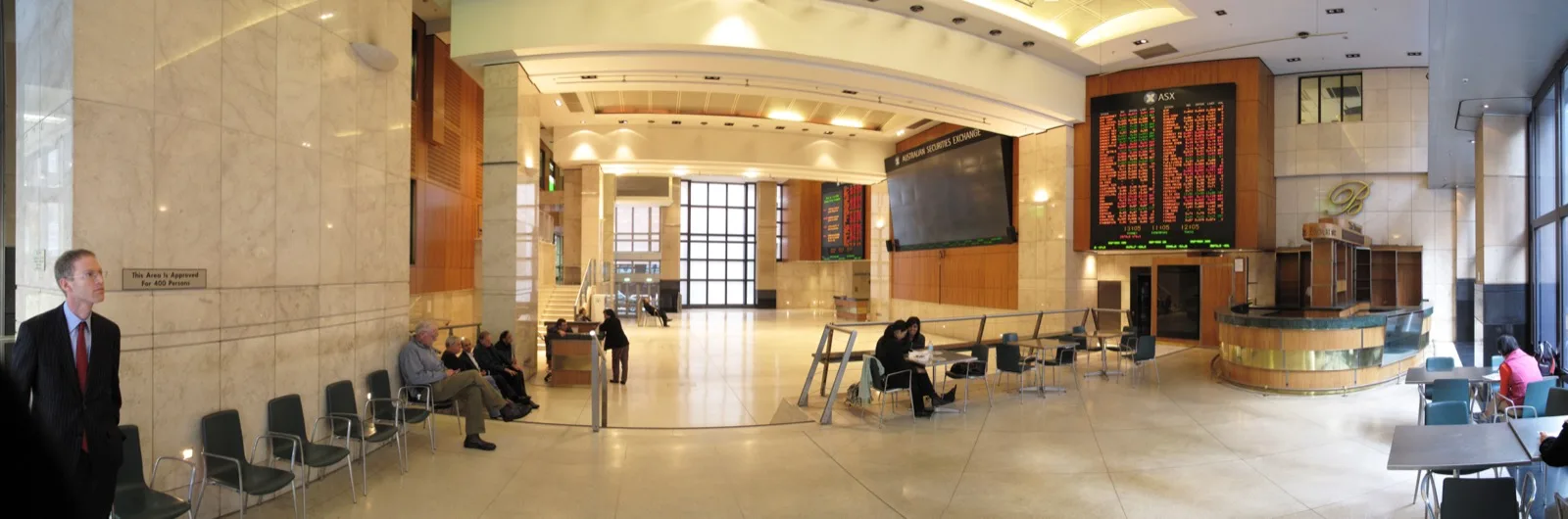
For many years BBSW was compiled from a survey of quotes submitted by a panel of bank dealers, a method that drew scrutiny worldwide after the LIBOR manipulation scandals prompted regulators to demand benchmarks be grounded in real, observable transactions rather than estimates. In response, the ASX Securities Exchange (ASX), which has administered BBSW since 2017, moved to a “Volume Weighted Average Price” methodology. Under this approach, the rate for each tenor is calculated from actual trades executed, and firm bid and offer prices submitted, by active participants in the bank bill and NCD market during the defined rate-set window each morning. Extreme or outlying prices are excluded before the volume-weighted average is struck, and the resulting rate is published, tenor by tenor, shortly after the window closes. This transaction-based design was adopted specifically to align BBSW with the International Organization of Securities Commissions (IOSCO) Principles for Financial Benchmarks, the global standard that emerged from the post-LIBOR benchmark reform effort. The Australian Securities and Investments Commission (ASIC) oversees compliance with these standards as they apply to BBSW.
Why the benchmark reaches so far beyond the money market
BBSW’s influence extends well past the bank bills it is calculated from because so many other securities are priced with reference to it. A floating-rate note (FRN), for example, typically pays a coupon defined as BBSW plus a fixed margin, reset each quarter using whatever the three-month rate happens to be on the relevant date. Bank-issued hybrid securities, which combine features of debt and equity and are commonly used by major banks to raise regulatory capital, are frequently structured the same way, with distributions set as BBSW plus a margin that reflects the issuer’s credit standing and the instrument’s subordination. Corporate borrowers use the same convention in bilateral loans and some bond issuance, allowing lenders and investors to separate the underlying cost of funds, which moves with the broader interest rate environment, from the credit margin that compensates for the borrower’s specific risk.
Because so many contracts reference it, even small movements in BBSW flow mechanically through to interest payments across the economy without any need for individual negotiation. That reach is precisely why the shift from a survey-based benchmark to one grounded in actual executed trades mattered so much to regulators. A rate that underpins this much borrowing needs to be traceable to real market activity rather than to what a handful of dealers merely say they would trade at, which is the structural change that transformed BBSW into the benchmark it is today.