lobal Securities News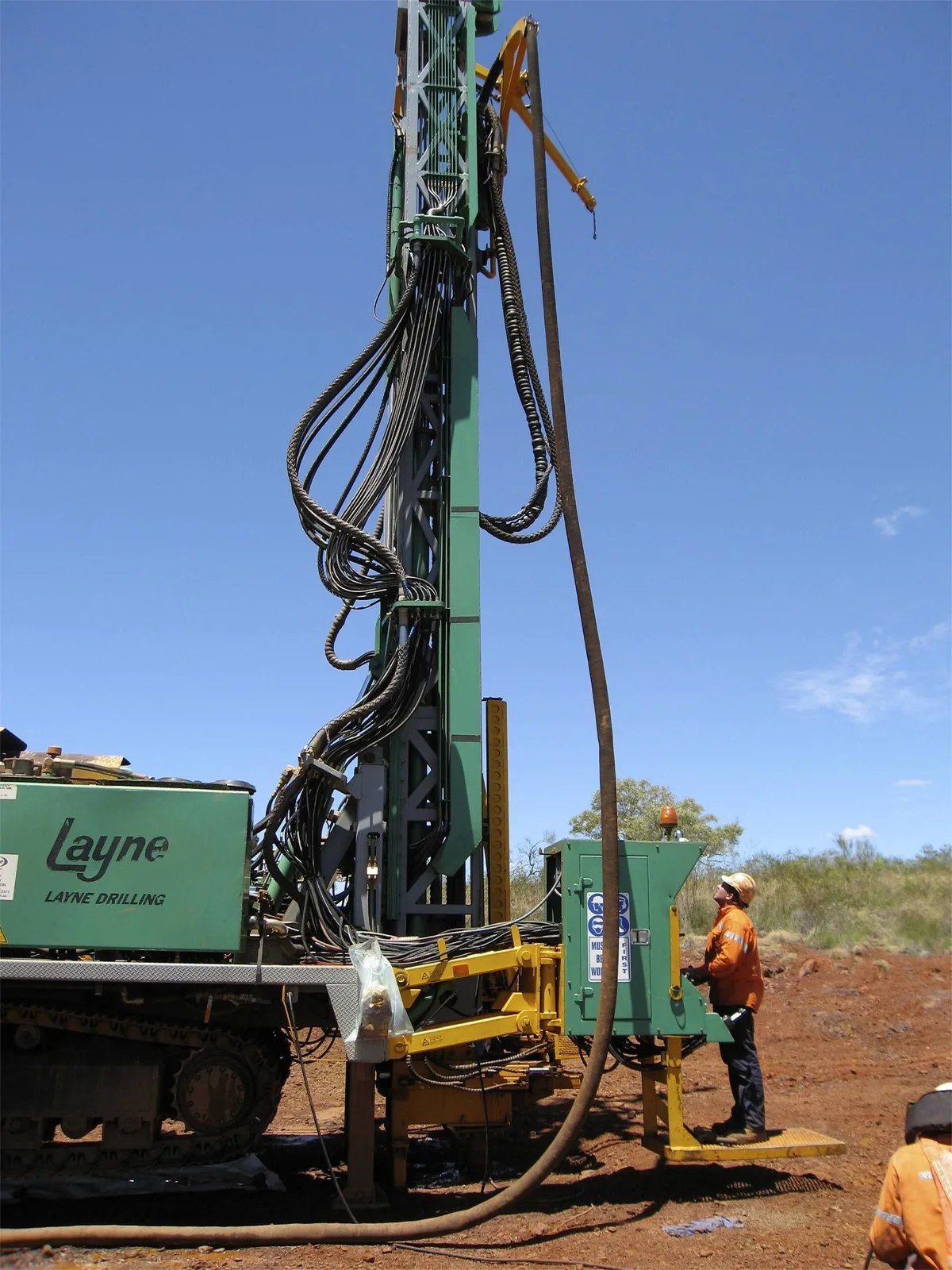
Alma Metals Limited (ASX: ALM) put out assay results on 4 August 2026 covering the first three holes of the infill drilling campaign meant to push its Briggs copper project in central Queensland toward a prefeasibility study. The individual intercepts are not standouts. Each hole carried copper along nearly its whole length at grades close to what the existing resource block model had predicted, and Alma framed that agreement between prediction and result, not any one standout intercept, as the actual news in the release.
Hole 26BRD0039 returned 322.3 m at 0.17 per cent copper, 10 ppm molybdenum and 0.58 ppm silver from 6.5 m, including 18.0 m at 0.25 per cent copper from 156.0 m and 86.9 m at 0.23 per cent copper from 207.1 m. Hole 26BRD0040 returned 388.4 m at 0.15 per cent copper from 4.2 m, with two intervals of 0.22 per cent copper inside it. Hole 26BRD0041 returned 400.5 m at 0.13 per cent copper from 3.5 m, including 139.1 m at 0.17 per cent from 5.0 m. Most assays sat in the 0.15 per cent to 0.20 per cent copper range, with some zones between 0.20 per cent and 0.25 per cent.
Where the holes were put, and why that matters
All three holes sit in the north-west central sector of the Briggs Central porphyry, collared on cleared tracks and drilled into porphyritic granodiorite. Alma has described surface copper anomalism in that spot as noticeably above background, though still weaker than on the resource’s southern side, and pointed to limited reverse circulation drilling from 2021 in the same ground, which had already turned up copper somewhat below the resource average, particularly within that granodiorite unit.
Alma’s explanation for the grade pattern is standard porphyry zonation. In the resource model, copper strengthens toward the contact between the porphyritic granodiorite and the surrounding volcaniclastic sediments, sustains a higher-grade halo some distance into the sediment, and then fades as distance from that intrusive contact grows. What these three holes tested is the granodiorite core, the system’s lower-grade part. Each hole also ended still inside mineralisation, at or close to its planned depth.
The resource and the program around it
Briggs sits within about 245 sq km of exploration permits and permit applications in central Queensland, roughly 60 km west of the deep-water port at Gladstone. Alma reports a resource of 2 Mt of contained copper at a 0.15 per cent copper cut-off, comprising 137 Mt at 0.25 per cent copper, 39 ppm molybdenum and 0.7 ppm silver in the Indicated category and 793 Mt at 0.20 per cent copper, 35 ppm molybdenum and 0.5 ppm silver in the Inferred category. At a tighter 0.20 per cent cut-off the deposit reports as 415 Mt at 0.25 per cent copper and 31 ppm molybdenum, containing about 1 Mt of copper and 28.6 million lb of molybdenum. Across the Indicated and Inferred categories the company also reports 73 Mlb of molybdenum and 16.5 Moz of silver.
Drilling began at the end of April 2026 under a program the company expects to run for 12 to 15 months. It has three drilling components. Four exploration holes for about 1,250 m test surface copper anomalism outside the resource outline. Infill drilling of 41 holes for about 12,500 m is meant to convert Inferred material to Indicated across the first half of a potential mining operation, and Alma has said that component supports an interim resource update and the first publication of production and financial metrics for Briggs. A further 35 holes for about 17,500 m are planned for the first half of 2027 to convert most of the remaining Inferred material.
The June-quarter report, dated 27 July, put the tally at six completed holes for 2,082.6 m. By 4 August that had moved to seven holes and about 2,300 m, with a further 34 infill holes for 10,000 m still to come in 2026. Overall, the program is meant to bring the current resource down to a nominal 80 m drill spacing and to generate material for metallurgical work. On the balance sheet, Alma reported cash and liquid investments of about $6.8 million at 30 June 2026 ($3.6 million cash, $3.2 million in listed investments), no debt, and a placement completed at $0.01 per share that raised $4.0 million before costs.
Analysis: a validation result, not a discovery result
The point of an infill program is not to find better rock; it is to cut the uncertainty attached to rock the company already counts, so the resource can be reclassified and a mining study can lean on it. That changes how these assays deserve to be read. What matters is not 0.25 per cent copper in an 18 m interval, but the low variance between predicted and actual grade that managing director Frazer Tabeart flagged, since variance is the thing that decides whether a block model holds up under reclassification.
On that test the first three holes did their job. They were drilled into the part of the deposit where the model predicted below-average grade, and they returned below-average grade in the expected place. Confirming a model in its weaker ground is a more informative result than confirming it in its strongest, though it is also only three holes out of a program of dozens, and Alma still describes assays for the following three holes as pending.
What this announcement does not touch is economics. Briggs is a very large, very low-grade porphyry, and 793 Mt of Inferred material at 0.20 per cent copper is a tonnage that only makes sense at scale, a capital question Alma has not yet answered in public. The company itself treats the coming interim resource update as the first moment production and financial metrics for the project get published at all. Until that happens, none of the drilling says anything about strip ratio, recovery, throughput or cost.
Three things would tell a careful reader whether the program is on track. Whether the remaining infill holes hold the same low variance once they move out of the granodiorite core and into the higher-grade halo near the intrusive contact, where the model is doing more work. Whether the metallurgical test work, which the company says is drawing material from every drilling component and aims at optimising copper, molybdenum, silver and gold recoveries, supports a single flowsheet across those domains. And whether the 41-hole infill component actually closes out by the end of 2026 as scheduled, since the 2027 drilling, the updated resource and the prefeasibility study all queue behind it.
What the company says comes next
The company plans to keep drilling through year-end, with assay releases on a regular cadence. Four exploration holes are earmarked to test geochemical anomalies beyond the resource, in ground covered by a 500 ppm copper-in-soil contour that Alma says stretches 400 m to 500 m west of the resource outline. Geotechnical logging on selected holes will feed into open-pit rock mass stability work, while environmental baseline surveys and metallurgical test work continue in parallel. A 16-person exploration camp, acquired during the June quarter, now lets Alma run a second rig on site.